Identify the stone before cleaning
Before treating a worktop, establish whether it is natural stone, an engineered composite or a ceramic surface made to resemble stone. Appearance alone is unreliable. Check the invoice or ask the installer. Natural stones also differ in composition and finish. Marble and limestone contain acid-sensitive minerals, so vinegar or lemon is not a useful compatibility test. If the material is unknown, put descalers aside until you can identify it. A product intended for a neighbouring sink may be unsuitable for the surround.
Remove crumbs or gritty particles with something soft before wiping. Choose a neutral cleaner suitable for the stone, use its stated dose and work with a cloth free from abrasive debris. Rinse where instructed and dry with a separate soft cloth. Extra soap can leave a film that looks like more dirt, prompting unnecessary repeat cleaning. On floors, change dirty water instead of carrying it from room to room. A clean tool and controlled amount of product often make the visible difference.
A spill and its remaining mark
Blot a spill promptly rather than spreading it across the worktop. Remove the residue with the compatible method. If a dull area remains, the finish may have been altered; it is not necessarily a stain that can be dissolved. Coffee, oil and an acidic splash do not automatically require the same treatment. Avoid cycling through stain removers. A photograph taken in side lighting, together with the material name, helps a supplier distinguish residue, absorption and a loss of polish before advising.
Look beyond the shower glass
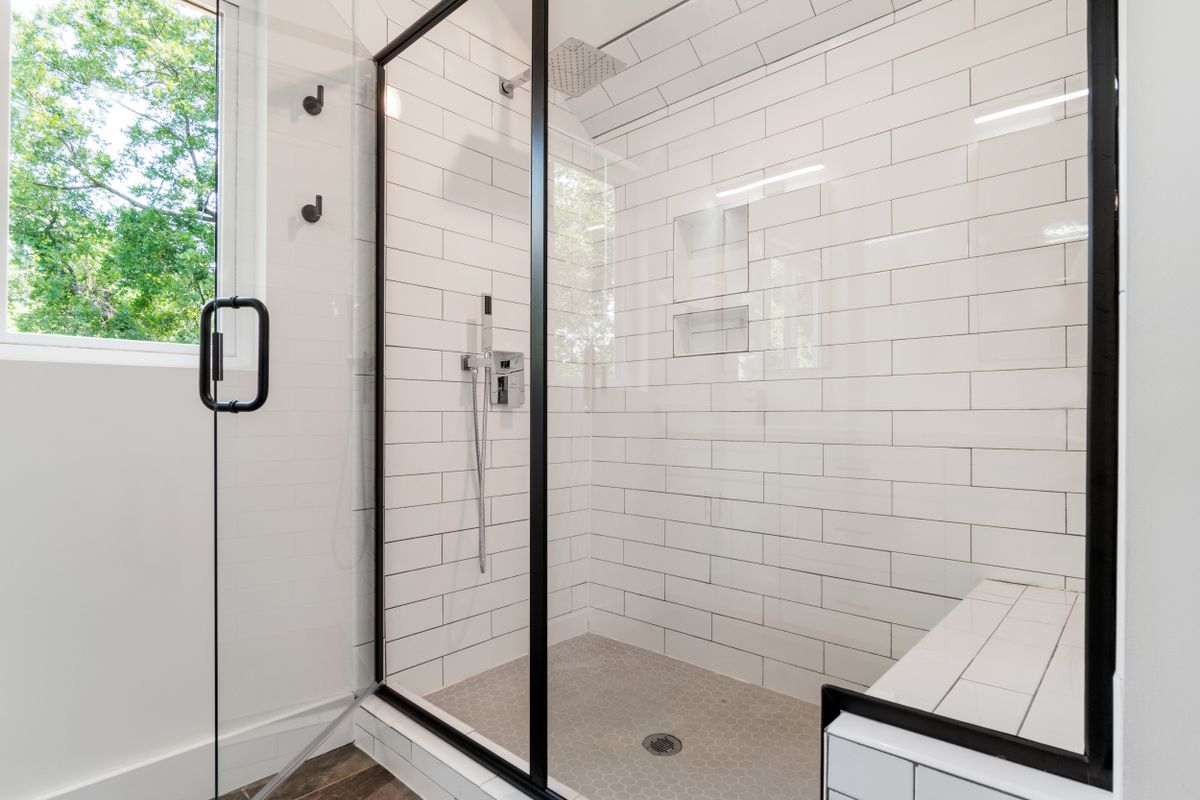
A limescale cleaner meant for glass can land on a stone shower tray, ledge or floor. Check surrounding materials before spraying anything. Removing water after use and drying edges helps limit the accumulation that makes harsh treatment tempting. Do not compensate for an unsuitable product with a rough scourer. Taps and grout have their own care requirements, too: compatibility with stone does not mean compatibility with every plated metal finish. Applying a permitted product to a cloth can offer better control than spraying broadly.
Sealing has limits
Impregnating treatments can improve resistance to stains, but they do not make stone immune to damage, and different stones do not all need identical treatment. Ask what has already been applied and when renewal is appropriate instead of assigning the whole home a fixed sealing date. Coasters, trivets and prompt attention to spills still matter. Where a mark calls for polishing, sanding or a chemical poultice, consult someone experienced with the material. That preserves the surrounding finish while the actual cause is assessed.
Further reading: