Measure with the lid open
Check the available width, depth and height, then include lid, pedal or drawer movement. A bin may fit beneath a worktop yet not open far enough to remove its bag. Make sure the pedal remains accessible without striking furniture. Inside a cupboard, allow for hinges and pipes. Do not obstruct access to a shut-off valve. Rehearse the footprint with a box before choosing a mechanism needing more space than its closed product dimensions suggest. The useful measurement is the bin in operation, not simply at rest.
Match capacity to emptying frequency
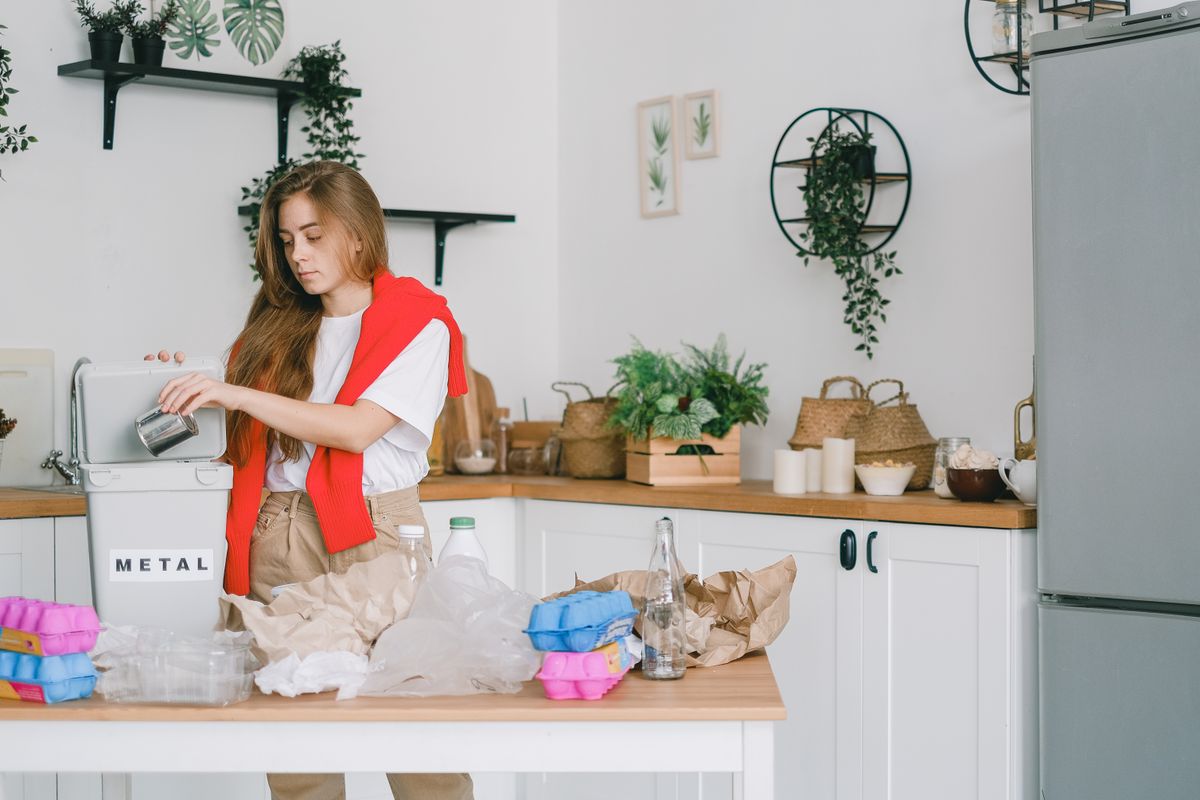
Consider household use and which waste goes there, following local sorting arrangements. A huge bin is not necessarily helpful if waste accumulates for too long. Bulky packaging and food waste may need different solutions. Decide between separate small containers and a divided unit. Check each compartment's actual volume: the advertised total can conceal a section that is too small for your routine. Choose around the waste you generate rather than a photograph showing equally filled compartments that may not reflect your home.
Inspect bag removal
Look for a rim that holds a bag without tearing it and a manageable inner bucket where included. Rehearse lifting a full bag without rubbing the wall or tipping the bin. Check compatible bag dimensions and availability rather than depending on a difficult-to-find format. Examine corners, hinges and removable parts for cleaning access. An attractive design may be inconvenient if each wash requires dismantling a mechanism that is hard to reach or dry afterwards. Easy emptying and cleaning should remain practical when the bin is no longer new.
Choose an opening you will use
Pedals, manual lids and sensors offer different trade-offs. A sensor adds batteries or power and another maintenance task; it is not automatically more convenient. Test stability and access with occupied hands, without placing waste in a shop display. With pets, consider the closure and location. A successful purchase makes sorting, emptying and washing easier without occupying the kitchen route. It does not need to be the largest bin or the one with the most elaborate mechanism to suit everyday life.