Measure the existing lamp
Record the base height and width, and photograph the shade attachment. Rings, supports and adapters are not universal. Check the fitting diameter and how it is secured; do not force a component that seems almost compatible. When shopping online, request a drawing if the description is unclear. A shade can look well proportioned on the table yet fail to fit the lampholder. Resolving that connection matters more than choosing a shape from a photograph and hoping an unspecified adapter will make it work afterwards.
Try the outline in position
Represent the approximate size with paper away from any lit bulb, never using it as a working shade. View the arrangement from sitting height and from the doorway. Check that it does not project awkwardly over a narrow bedside table or touch a wall. A broad shade can balance a low base, but requires room. Do not treat a proportion guideline as an obligation: the table, sofa back and normal viewing position also influence whether the complete lamp feels appropriately sized in its setting.
Fabric changes the light
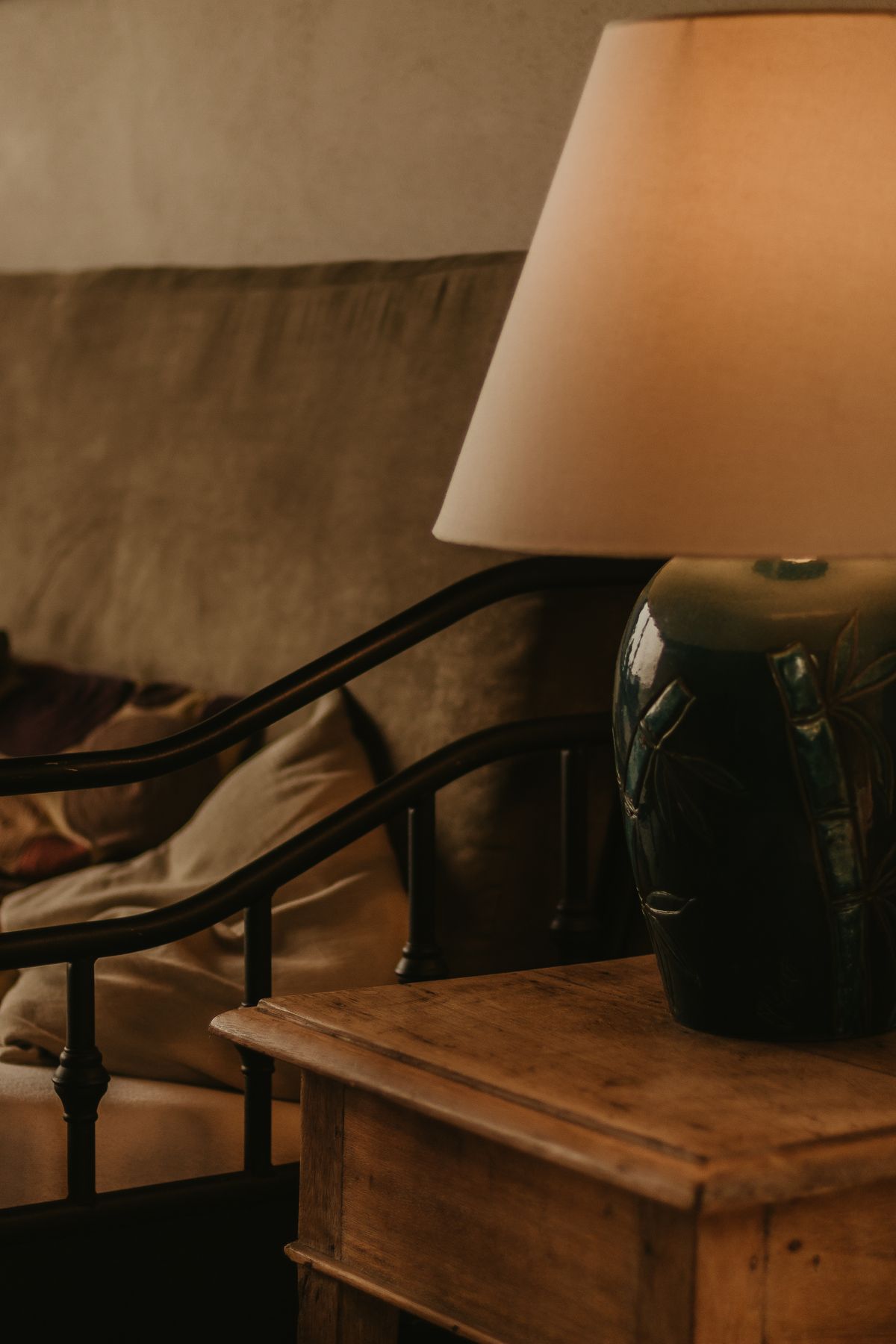
A pale translucent shade can spread light differently from an opaque one directing more upwards and downwards. For reading, check the illuminated area and whether the bulb is directly visible from your seat. Interior colour can change the overall impression too. Look at an illuminated example where possible, while keeping bulb and shade within the manufacturer's specifications. Do not increase wattage beyond the lamp's limit to compensate for an overly dense fabric. The right shade should support the intended task with compatible components, not require an unsafe workaround.
Review upkeep and safe fitting
Confirm bulb dimensions, appliance limits and clearances required by the design. Use compatible parts and keep the lamp information. Avoid adding decorations near the light source that were not intended for it. Consider how dust will be removed and whether the material tolerates the care available. A delicate shade beside a splash-prone area may be impractical. The final choice should provide stable assembly, comfortable light and easy switch access, rather than only an attractive outline when switched off. Those everyday details determine whether it remains pleasant to use.