Think about how you remember books
Some people search by author; others remember the subject or series. Choose a main organising principle that matches that habit. You might separate fiction, reference, cooking and children's books, then arrange each group in a straightforward way that everyone using the shelves understands without needing a written catalogue.
A small home library does not need institutional cataloguing. A few broad areas are usually enough. If someone else uses the collection, explain the approach and avoid changing it continually. Familiarity with a location also helps people find what they want and return it to the right place afterwards.
Visible spines and stable support
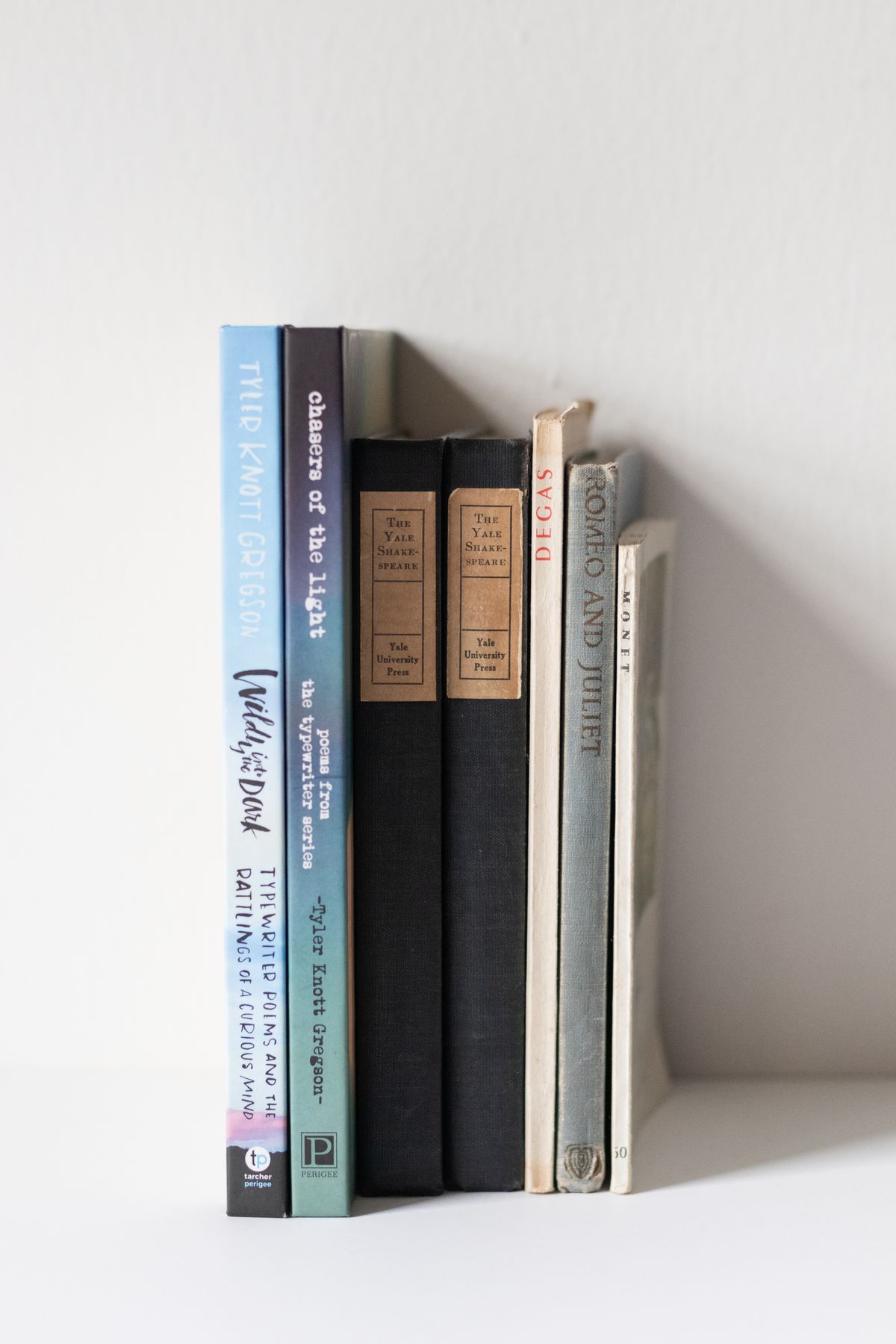
Position books so their titles can be read wherever possible. Turning them around to display their pages may unify a photograph's colours, but makes finding a particular title harder. Leave a small amount of room to grip each book without pulling forcefully on the top of its spine.
Use stable bookends where gaps remain. Horizontal stacks can work for a few volumes, but do not put the most frequently consulted book beneath a tower. Large formats need sufficient support and a shelf able to carry their weight. Check the furniture's load limits instead of assuming every shelf has the same capacity.
A place for books in circulation
Reserve a small area for current reading and borrowed books. A note naming the lender helps with returns, and you can record books you lend out too. Keeping this group separate prevents accidentally absorbing someone else's book into the permanent collection or forgetting that a volume is due back.
Cookbooks are useful near the place they are consulted, but protect them from splashes, heat and steam. The entire collection need not live in one room when particular groups have a clear purpose elsewhere. A small working shelf can serve daily use while the main collection stays in a quieter location.
Allow growth without filling every edge
Leave some spare room among groups that expand regularly. If each new book requires shifting three shelves, the classification is unlikely to last. During reviews, decide what to retain, give away or donate according to condition and the recipient's requirements.
Remove dust using a method suitable for books and furniture, without wetting pages. Check the bookshelf's stability and secure it according to its instructions. Comfortable access also means it does not tilt when a heavy volume is removed.