Review before grouping
Remove products carefully and read their instructions. Identify damaged containers, caps that no longer close and products whose contents are uncertain. Do not combine leftovers to free space or pour substances into unidentified containers. Follow the product label and local collection guidance when disposing of unwanted cleaning products.
Check what you genuinely need as well. A specialist cleaner may be appropriate for a delicate surface, but several open bottles serving the same purpose make supplies harder to manage. Use the relevant product while respecting its storage and usage instructions, rather than treating every bottle as interchangeable with the others.
Separate products from tools
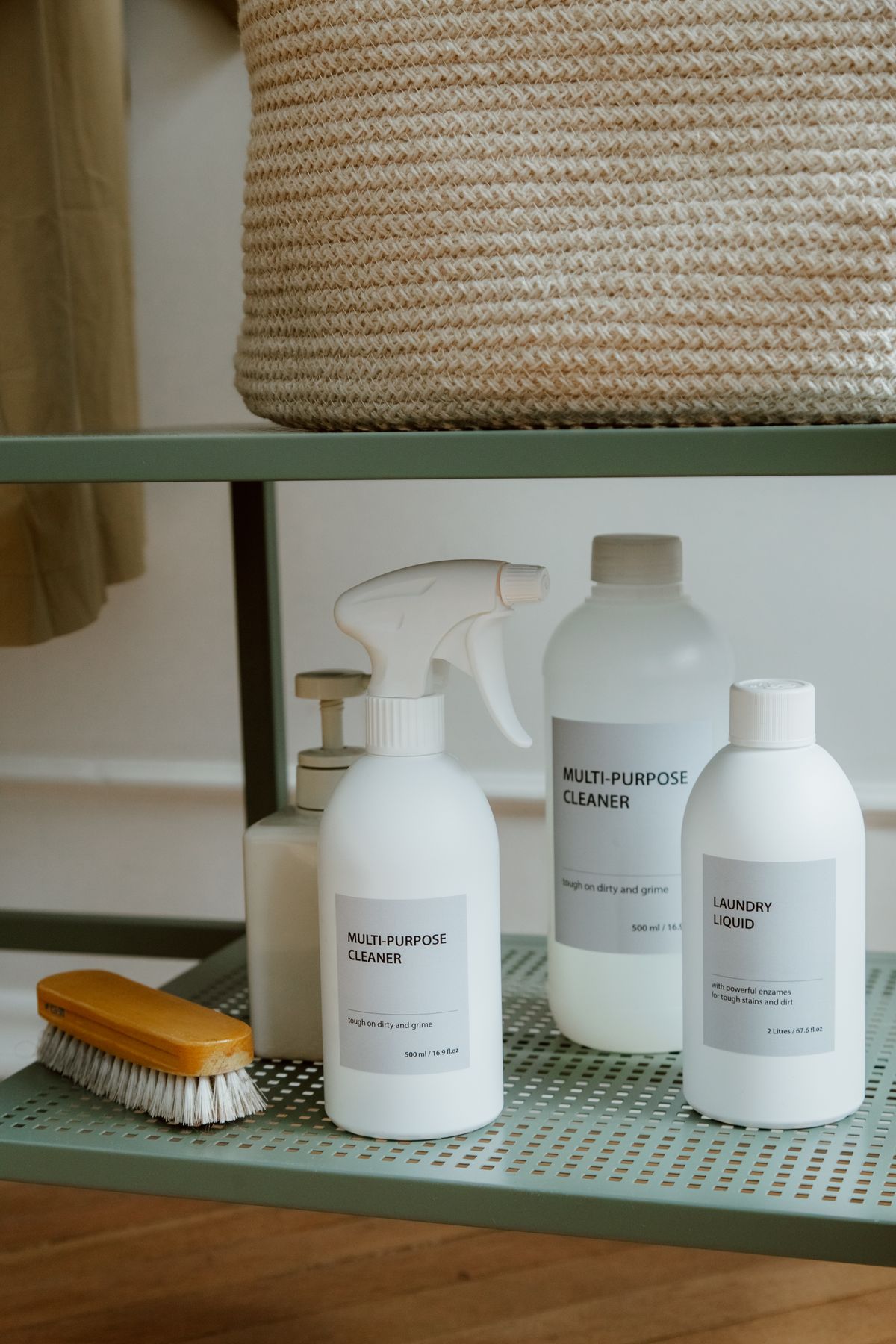
Keep clean cloths in their own basket and bottles in another area. Damp cloths need to dry before storage; enclosing them with spare supplies does not make them ready for next time. Store brushes and accessories so their intended task is recognisable, particularly tools used in the bathroom.
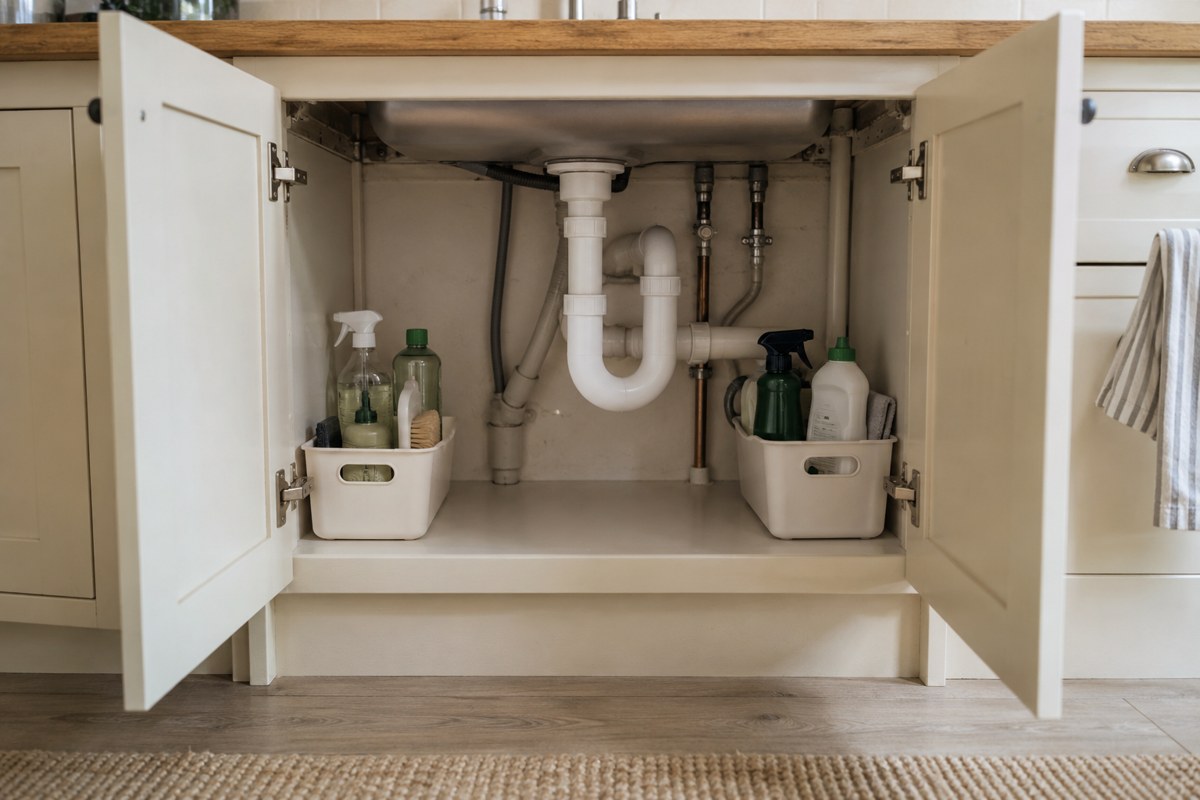
A washable tray beneath bottles can collect small drips, but does not make every combination of products suitable for storage together. Follow each label's precautions and keep containers upright. Avoid stacking bottles so that removing one brings others down. Leave enough space to grasp a bottle securely by its body.
Retain the original information
Original containers reduce confusion and preserve warnings. Never use drinks bottles, food jars or unmarked decorative containers to hold cleaning products. Keep cleaners separate from food and medicines, even when everything could technically fit inside the same large cupboard. Visual similarity is a poor guide to compatible storage.
Use child-resistant cupboard latches where appropriate and keep hazardous substances beyond children's reach. Aerosols and other products have specific requirements around heat; follow their instructions rather than assuming any shelf will do. A cupboard beside a heat source may be unsuitable, regardless of how conveniently it fits the cleaning equipment.
Prepare a small working kit
Gather tools for a particular task in a portable basket, then return it to secure storage afterwards. Carry only the products required. If children or pets are present, do not leave the basket accessible while you step away or answer the door.
Add a replacement to the shopping list when needed, after checking your reserve. A few clearly identified bottles are easier to manage than an arsenal of products that rarely gets used.