Store the project as you will resume it
Give the current project its own tray or box. Include materials, the pattern or instructions, and a note about the next step. For knitting, that might record where you stopped. For a model, it could identify which pieces have already been checked against the instructions and which still need attention.
The container should protect the work without forcing you to dismantle it each time. Check dimensions and height before buying. A lid that presses on a delicate piece, or a deep box that hides small components, is unsuitable even if it fits the shelf perfectly. Consider how the project will travel to the work surface too.
Separate shared tools
Scissors, rulers and tools used across several projects need a common home. That prevents buying another set because the first disappeared inside a closed project box. Return shared equipment at the end of the session, leaving only project-specific materials with the work that is in progress.
Keep tools that should not move between tasks clearly identified. Scissors reserved for fabric, for example, can carry a simple label. Store cutting tools, needles and small pieces securely, especially where children also use the space. A portable project box should be safe to close and put away whenever the session is interrupted.
Make reserve materials visible
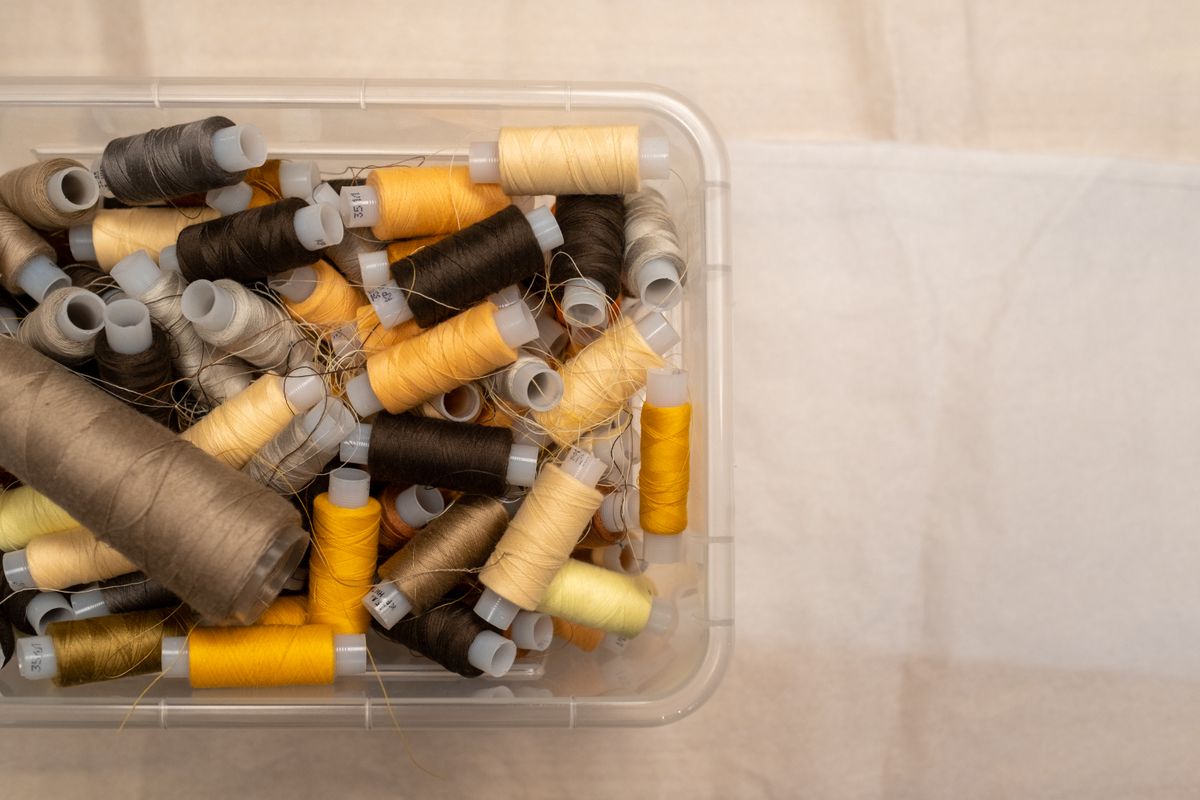
Threads are easier to find when colours can be distinguished without emptying the box. Large paper needs support against bending, while fabric scraps may benefit from grouping by usable size instead of forming one compressed bag. Choose divisions around those materials rather than forcing everything into an identical container format.
Retain composition labels, measurements and batch details when they may matter for continuing a piece. Adhesives, inks and similar products must follow their storage instructions in original containers, away from incompatible conditions. Do not decant them simply to make them fit a small organiser or match the appearance of other supplies.
Limit projects waiting in reserve
An ideas box can become twenty abandoned jobs. Occasionally review what you genuinely want to resume and which materials can return to general supplies. Keeping a piece with a clear plan is different from retaining every remnant indefinitely because the decision feels unfinished.
Before shopping, check both the project box and reserves. Record exactly what is missing, including size or colour. Purchases can then serve work you intend to do instead of adding another unclassified bag.