Gather ingredients used together
Divide the space around your usual meals: breakfast supplies, cooking ingredients, tins and baking supplies, for example. Adapt those groups to your household. Frequent bread making might justify a dedicated flour and equipment area. If you rarely bake, those ingredients need not occupy the most accessible shelf.
Make the first groups without buying containers. Bring duplicate packets together and check storage instructions and dates. Some products require refrigeration after opening. Do not return them to the pantry simply because that was the correct location before the seal was broken. An attractive arrangement cannot override the instructions on the pack.
Avoid an invisible second row
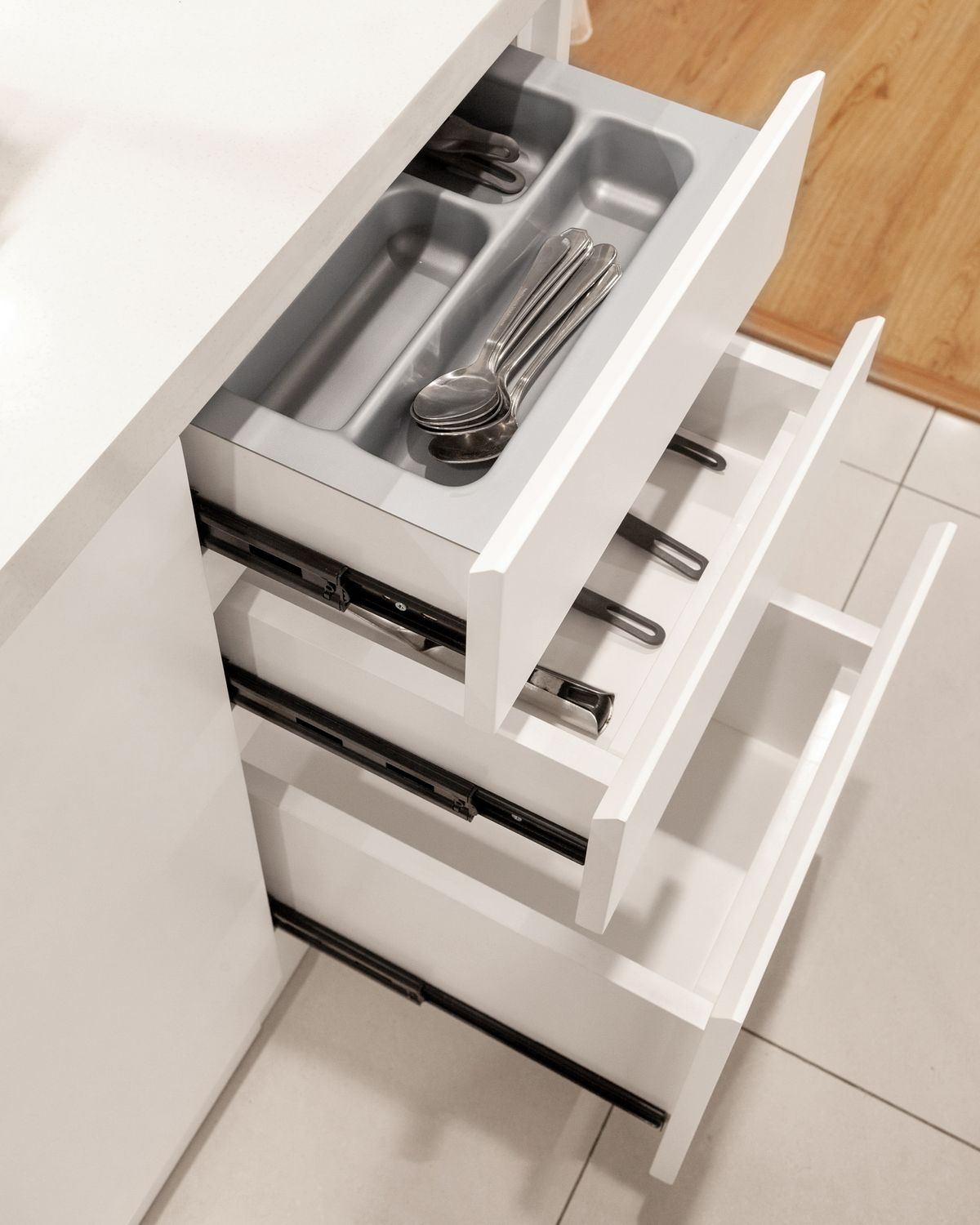
Deep shelves work better with baskets that slide out as a whole. A basket of pulses lets you see what is behind without removing every packet. Small jars may benefit from a stepped organiser, provided it stays stable and does not overload the shelf beneath it.
Place products that should be used earlier in front of newer equivalents. Rotation becomes much simpler when similar packets live together. A small use-first area can draw attention to open ingredients, but it does not replace the storage conditions or safety dates specified on their packaging. Check the actual product before planning a meal around it.
Decant only where it helps
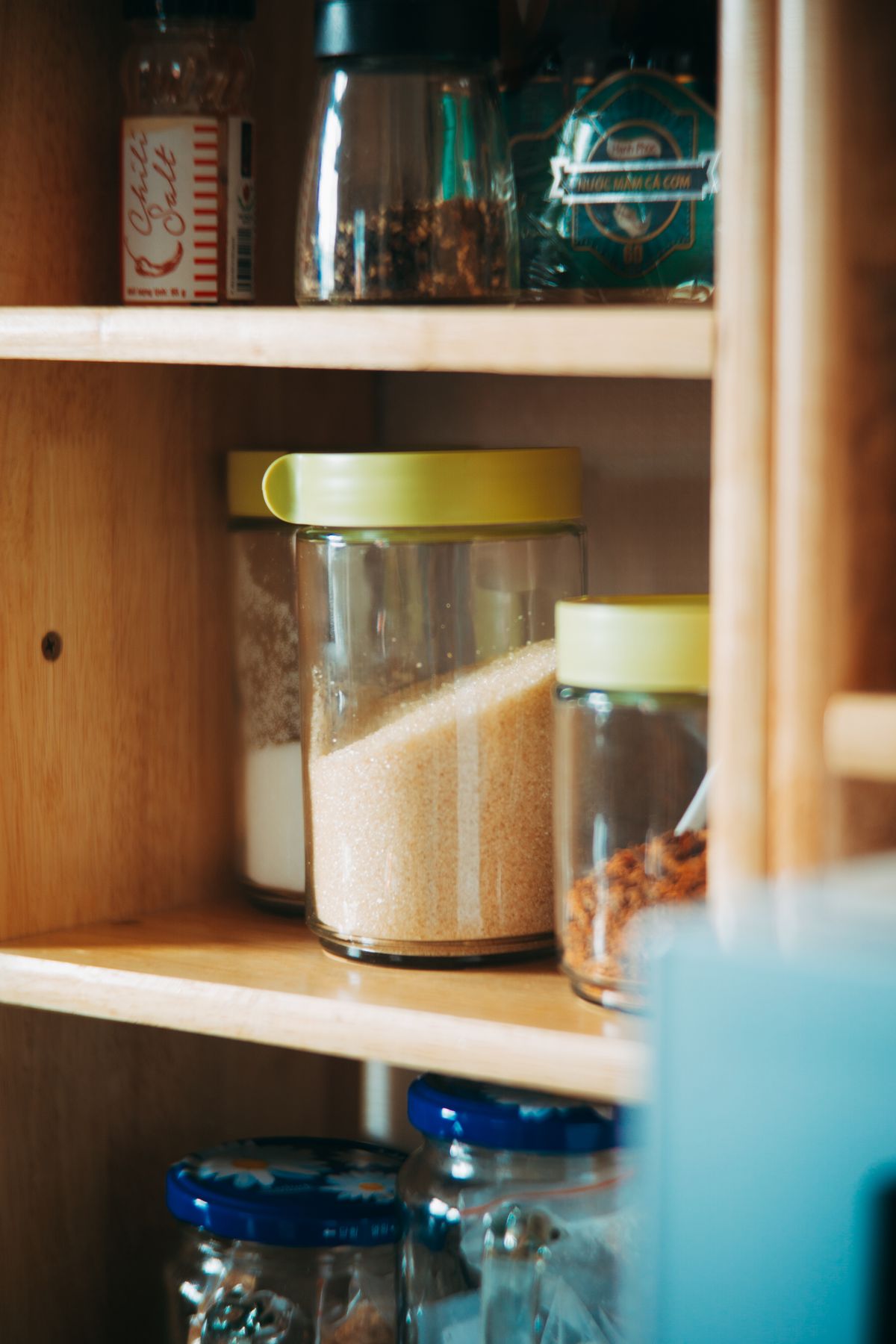
A jar can be useful for flour that spills or lentils bought loose. Not every food needs a different container. Retain ingredients, allergen information, dates and preparation instructions, either with the container or in a clearly identifiable photograph of the original label.
Before refilling, clean and dry the container as appropriate, and avoid casually topping old contents with new. Check that the material is suitable for food and the lid closes properly. A matching set of jars does not compensate for losing information about what is inside them. Leave enough room to scoop or pour without scattering ingredients.
Write the list beside the shelves
Keep a shared shopping list accessible or use a phone note. Add an item when your agreed reserve runs out, rather than whenever a small gap appears. Before going shopping, spend a minute reviewing each area. This small habit turns organisation into practical help with cooking and buying fewer duplicates.