One entrance and three destinations
Choose a tray for post you have not reviewed yet. It should not become the archive. Open it regularly and decide whether each document needs action, needs keeping or can leave. Magazines and advertising leaflets need not enter the same process as important correspondence, particularly when they make the tray hard to close.
Keep a visible folder for outstanding actions. Add a note saying what needs doing and when, especially if the next step is not obvious. A sealed envelope in a pile is a poor reminder that you must supply information or respond to a request. Record deadlines somewhere you actually check.
File according to how you search
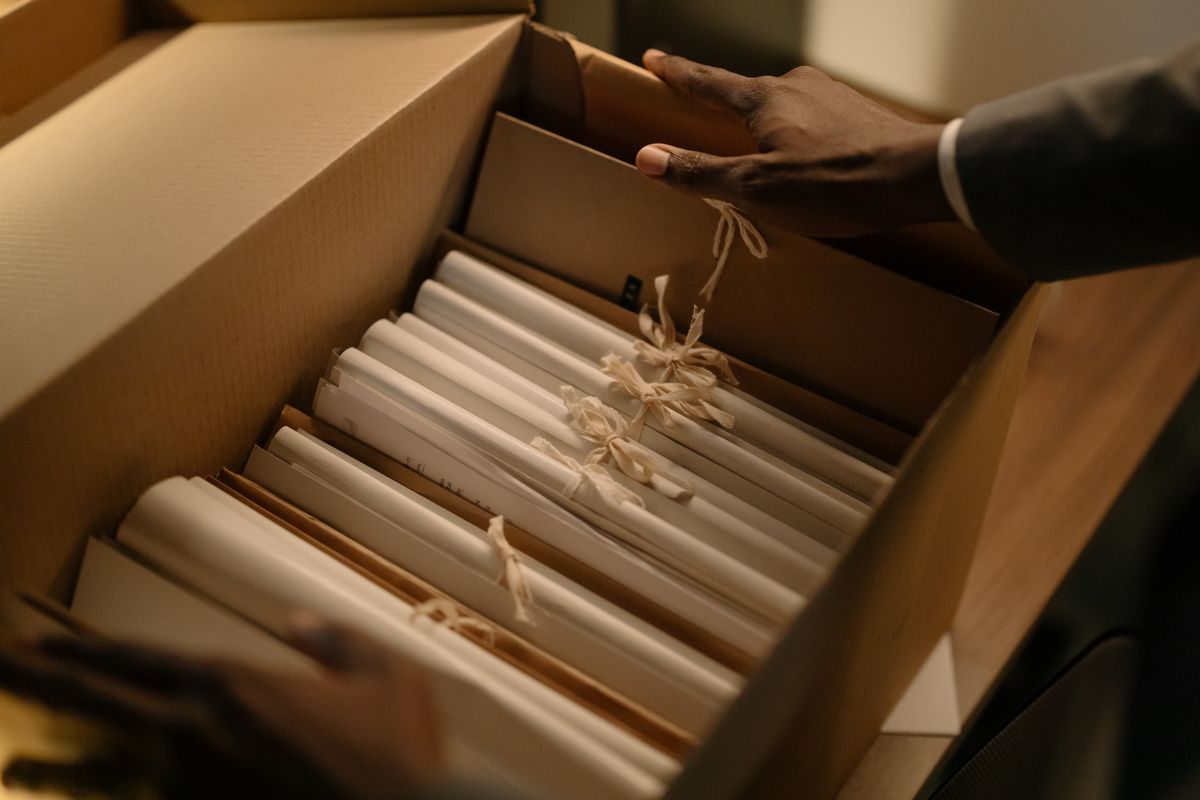
Think about the question that will bring you back to a document. Finding the washing machine warranty is usually easier in a household folder than by remembering which month its letter arrived. Start with broad groups such as housing, services, work and personal matters, adjusting their names to your circumstances.
Avoid a separate folder for every company when you have only one piece of paper from it. Date order within a broader group may be enough. Keep documents relating to an ongoing application together until it finishes, and note anything missing. Do not scatter one conversation across several places simply because the documents arrived in different formats.
Choose what to digitise
Scanning makes copies convenient to consult, but does not mean every original can be destroyed. Check the requirements that apply to each document before discarding it. Retention periods depend on the country, process and circumstances. A single rule for every piece of household paperwork may be inappropriate.
Use recognisable file names containing the date, subject and sender. Store digital copies securely with a backup. Avoid leaving photographs of sensitive documents scattered among images that automatically share with other people. A useful digital archive needs the same clear categories as its paper counterpart.
Make the review finish
Once a week, spend a short period on the action folder. When an issue is resolved, file or dispose of it as appropriate instead of returning it to the incoming tray. If information is missing, write down the specific next action.
Dispose securely of papers containing personal information once you no longer need to retain them. Keep important and sensitive originals somewhere secure. The system can remain small, provided every document has a destination and unfinished matters stay visible.