Choose a suitable location
Find adequately ventilated space where the airer will not block doors, exits or ordinary routes. Do not drape clothes over heating equipment or place them near heat sources unless their instructions permit it.
Watch for condensation and damp nearby surfaces. Drying clothes adds moisture to the air. If problems recur, review ventilation and the home’s conditions rather than merely moving the airer somewhere less visible.
Prepare the load before hanging
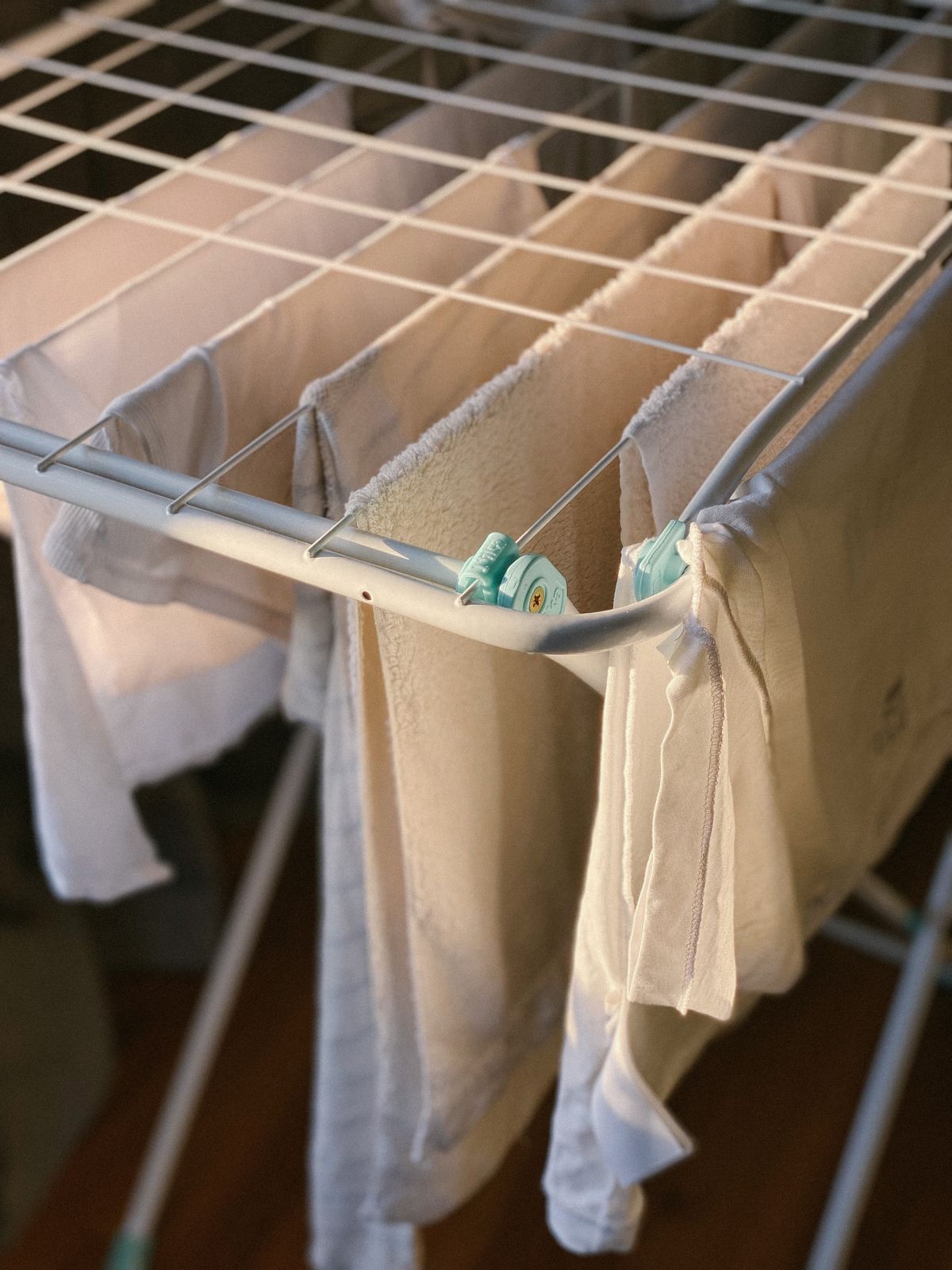
Use a spin setting allowed by both the garment label and washing machine for that fabric. Shake items gently and separate them, avoiding overlapping layers that retain moisture. Thick pieces may need a different position from lightweight shirts.
Do not exceed the airer’s stated load or concentrate all the weight on one side. Check stability on the actual floor. For a folding model, ensure the mechanism is locked as designed before adding clothing.
Keep loads manageable
Washing a smaller amount may be more practical than tightly packing every rail when drying space is limited. Consider when the room will be available and how long different fabrics take under your conditions.
Remove fully dry items to release space and improve circulation around the remainder. Do not put damp garments away simply to finish tidying sooner. Check seams, waistbands and thicker areas, which can remain wet after the rest feels ready.
Store the equipment without another obstacle
Measure the folded airer and decide where it will live. It should remain stable rather than falling when a door opens. Keep small accessories together so each load does not begin with searching for them.
If using a dehumidifier or tumble dryer, follow its installation, ventilation and maintenance requirements. No appliance removes the need to check garment labels or keep air inlets and outlets clear. Its own footprint should be included in the room plan.
Further reading: