Clarify the actual restriction
Being unable to drill a particular wall does not mean every piece of furniture should remain unsecured. Check the tenancy and discuss necessary changes. Permission for suitable anchoring may enable a safer, more useful solution than several improvised accessories.
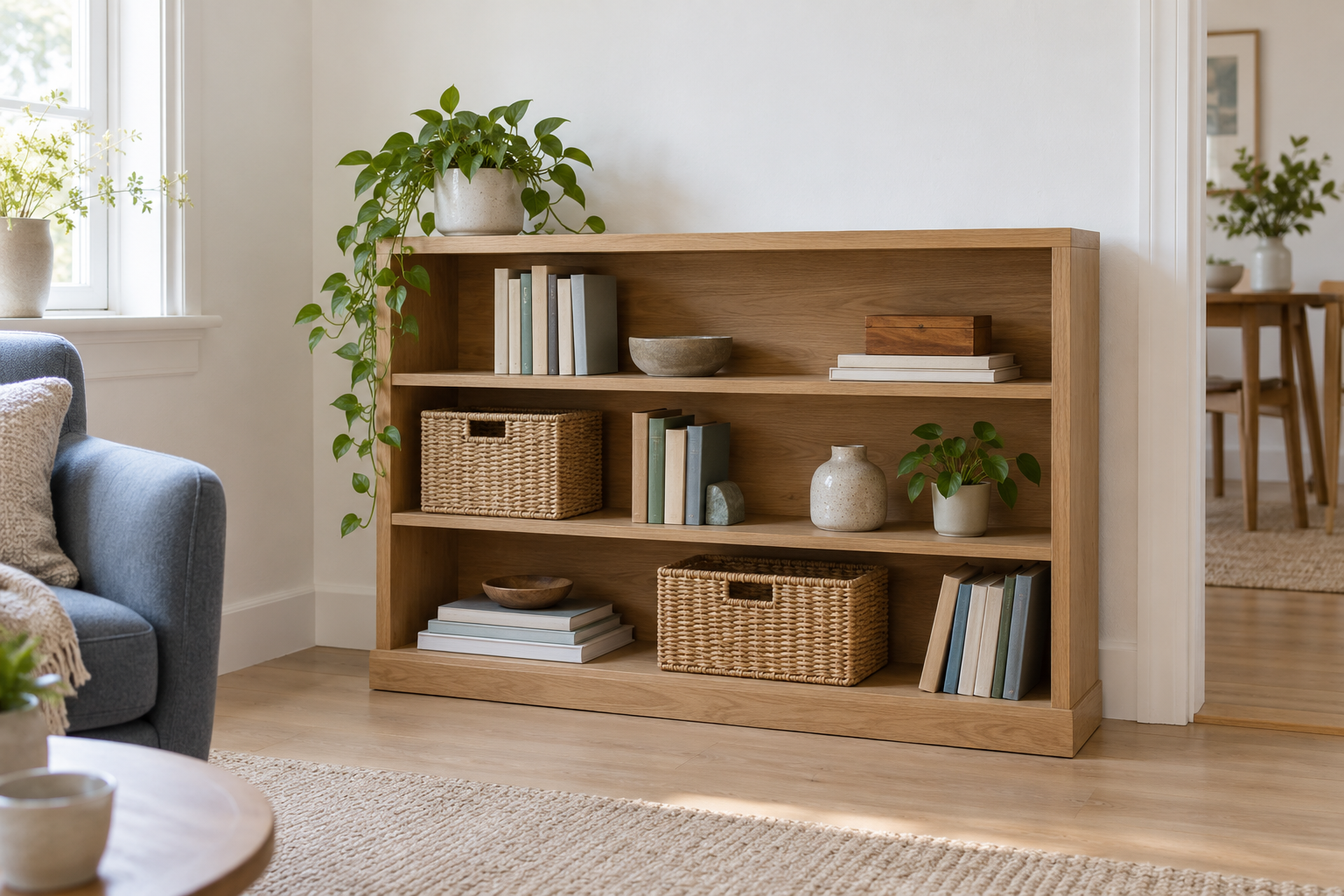
If a manufacturer requires anti-tip fixing, do not omit it to protect the paint. Arrange an authorised installation or choose another appropriate furniture type. Safety does not depend on a bookcase appearing steady while empty.
Use existing capacity first
Reorganise internal shelves, drawers and gaps before buying more structures. A divider or correctly sized box may improve storage you already have. Respect cupboard loads and avoid blocking hinges or ventilation.
Over-door accessories require checking door thickness, clearance and closure. Not every frame accommodates an added hook. Test without forcing and remove the accessory if it marks the surface or prevents proper closing.
Read adhesive conditions
An adhesive support has limits for material, weight, preparation and waiting time. Its stated capacity does not multiply by adding strips arbitrarily. Nor is mark-free removal universally guaranteed, even when a product is described as removable.
Use these systems only for their specified applications and surfaces. Do not suspend hazardous objects over beds or walking routes using a system not intended for them. Keep the removal instructions and respect the landlord’s permission.
Choose pieces that can move with you
A low container or moderately sized unit may adapt to a future home. Check stability, loading and how you will move it. Wheels do not remove the need to engage locks where the design requires them.
Avoid filling every gap with a different organiser. One well-positioned category that is easy to put away often improves order more than several small systems. Preserve cleaning space and access to sockets or inspection points.