Separate routine cleaning from accidents
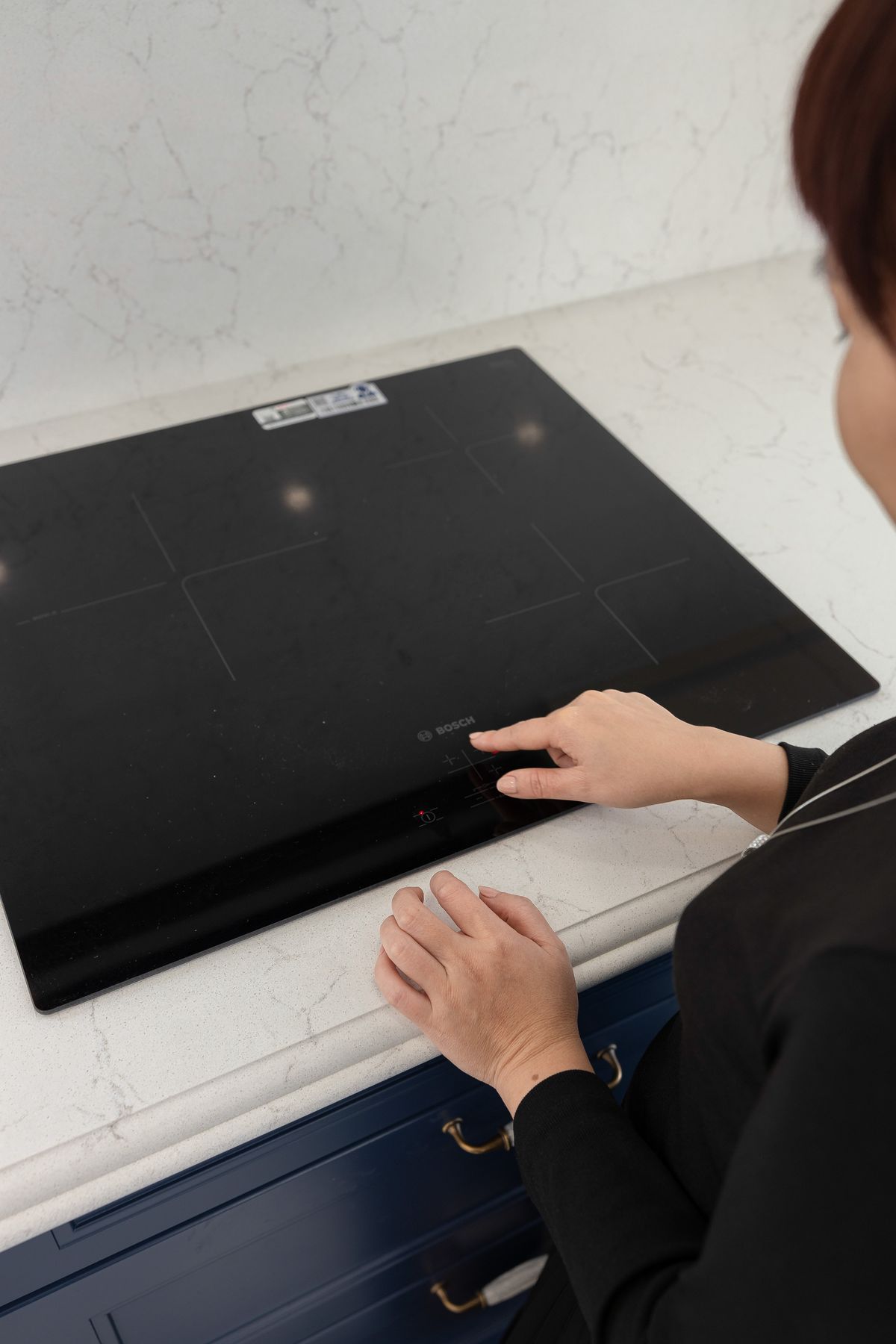
Switch the hob off and check its residual-heat indicator before routine cleaning. Certain spills, including melted sugar or some plastics, have special immediate-removal instructions from some manufacturers. Consult the exact guidance rather than touching or improvising on a hot zone. This cool-surface cleaning method does not replace those directions. If the glass is cracked, stop using the hob and contact the service provider. Do not simply clean it and cook again to see whether the crack causes a problem.
Lift loose particles first
When it is safe to work, collect crumbs and grit with a soft cloth. Check the undersides of pans as well: a trapped particle can mark glass when a pan is moved. Do not use the hob as a cutting surface or leave tools on it while cleaning elsewhere in the kitchen. A dried splash is not a reason to reach for a kitchen knife. Identify the cleaner or implement recommended for the model and prepare a clean cloth for removing the resulting residue.
Apply a controlled amount
Use a ceramic-hob cleaner approved by the appliance instructions. Not every kitchen degreaser is suitable. Apply it as directed, avoiding controls, seams and edges where liquid could collect. Work on one area at a time and allow only the stated contact period. A thick layer does not compensate for an unsuitable product. Where the hob has a metal surround, check its care too: a cleaner compatible with the glass is not automatically safe to leave on the surrounding frame or decorative finish.
Scrapers need their own method
Some hobs permit a dedicated scraper for attached deposits. Do not replace it with a loose blade or use a damaged implement. Follow the manufacturer's angle and technique, keeping hands and other people away from its path. If instructions are unavailable or the deposit will not lift with the authorised method, ask before persisting. A new scratch cannot be removed by increasing the cleaner dose and may later be mistaken for a stubborn dirty streak. Controlled work protects the surface you are trying to restore.
Finish before cooking again
Remove the product and rinse or damp-wipe as instructed, then dry the surface. Check that cooking zones are free from cleaning residue before switching them on. Look in side lighting to distinguish a remaining product film from an alteration to the glass. To simplify the next session, lift pans rather than sliding them and clean their bases once cool. Store hob-cleaning tools separately from gritty scourers used for other tasks, so a clean-looking cloth does not become the source of a fresh mark.
Further reading: