Use one product at a time
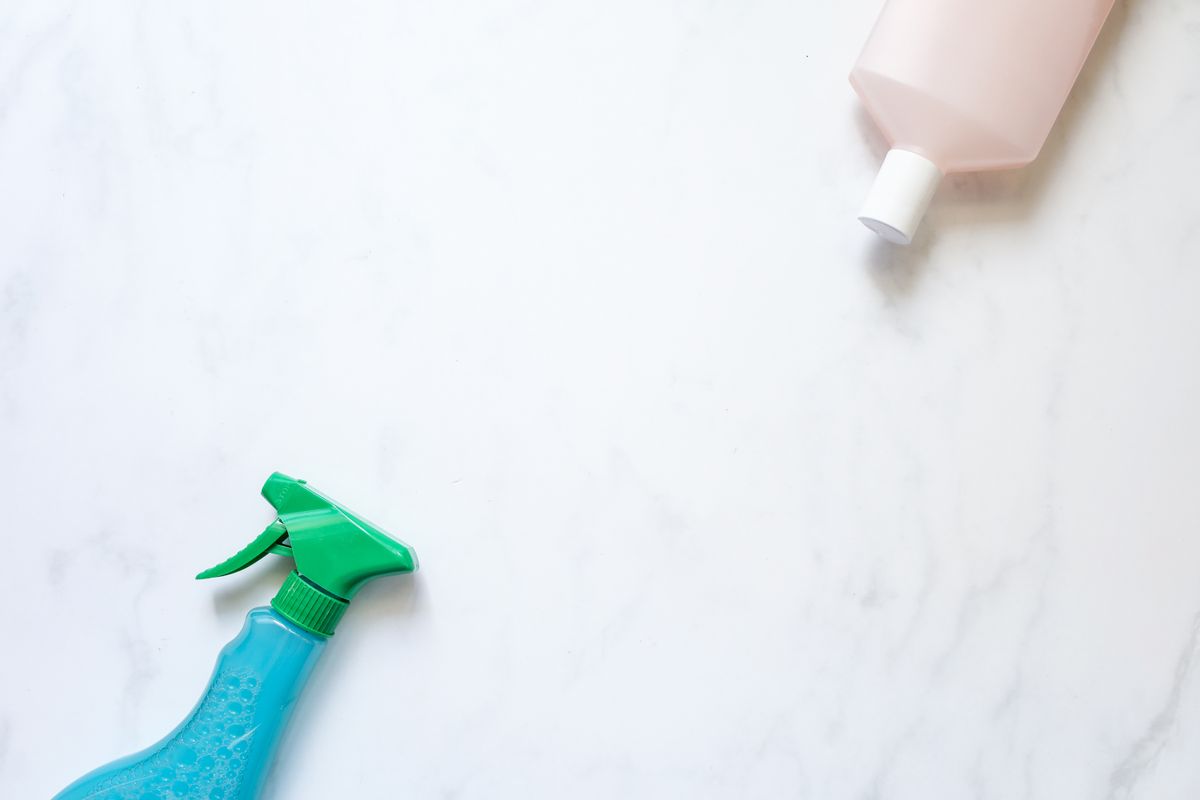
The simplest rule is not to mix cleaners or disinfectants. That includes adding household ingredients such as vinegar to a commercial formula. Bleach needs particular care: it must not be combined with ammonia, acids or other cleaners. You do not need to memorise every possible reaction to work cautiously. Keep each product in its original container, read which surfaces it is intended for and follow its application method. If the result is inadequate, stop before adding another substance over the first.
The label supplies the valid recipe
Where dilution is required, the label says how much product to use and what to dilute it with. Concentrations vary between brands and formats, so a measure remembered from another bottle may be wrong. Do not turn a specific disinfection instruction into a routine for the entire home. Removing dirt and disinfecting are different aims. Contact time also matters where the product requires a surface to remain wet for a stated period; wiping it away immediately does not follow that process.
Buckets and cloths can carry mixtures
Residue can remain in a cloth, sponge, spray bottle or the bottom of a bucket. Do not refill an old container with a different formula. Prepare clean tools before changing tasks and follow the surface-rinsing directions. Dispose of leftover solutions according to the label and local guidance rather than combining different residues to save space. An unlabelled bottle is not a useful shortcut: keep it out of use until it has been correctly identified. A familiar colour or smell is not reliable identification.
Prepare the working area
Provide the appropriate ventilation, move food away and keep children and pets out of the cleaning area. Wear the protection specified on the container. Put the bottle where it cannot be knocked over or mistaken for a drink. Before cleaning a bathroom, consider what has already been applied to the toilet, drain or shower screen. Moving between surfaces with the same sponge can transfer product even when nothing has deliberately been mixed in a container. Planning the sequence is easier than trying to correct an accidental combination.
If a mixture has already happened
If you notice irritating fumes or suspect a reaction, stop cleaning and move away to fresh air without exposing yourself to collect belongings. Do not try to neutralise the mixture with another substance or lean over it to smell it. Keep others away and contact local emergency or poison services as appropriate, especially if symptoms occur. Provide the product names when this can be done without going back into the area. Leaving the exposure matters more than finishing the floor or rescuing the cleaning equipment.