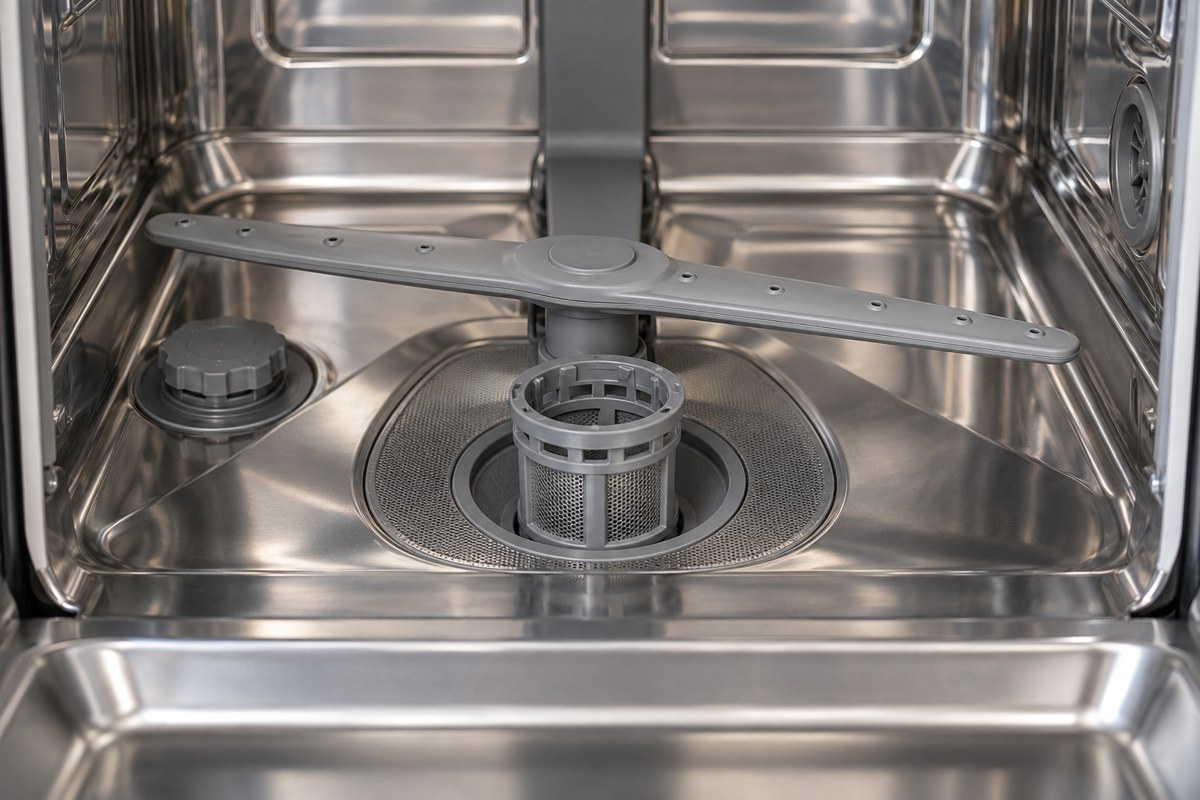
Identify the correct assembly
Open the manual before twisting a part in the base. Filters can have several components and different locking arrangements. Let the appliance cool, switch it off and follow the manufacturer's safety directions. Remove the lower basket where appropriate so that you can see clearly. Do not confuse the filter with a pump cover or routinely dismantle that area. A photograph of the installed assembly can help you recognise its orientation later, especially if several similar-looking parts need to be fitted together in a particular order.
Lift debris out carefully
Release the filter using its intended mechanism and lift it gently. Keep a container nearby to catch debris before carrying it to the sink. Broken glass or other sharp objects may be present, so do not explore the opening blindly with your hand. If you find a damaged part or an object that cannot be safely removed, consult the instructions or service provider. Tipping dirt from the filter into the appliance defeats the purpose of the task and can make a small maintenance job more complicated.
Wash without distorting the mesh
Where permitted, separate the components and rinse under running water. Bosch recommends water, mild soap and a soft brush for its filters when needed; use the corresponding method for your own model. Avoid wire, knives and metal brushes for opening blocked holes. The mesh needs to keep its shape. Remove loosened residue and rinse soap away thoroughly. Leaving hand-washing detergent behind is not suitable preparation for the next dishwasher cycle, even if the visible parts appear much cleaner than before.
Check the final fit
Inspect for damage and clean the accessible seating area as the manual directs before installation. Assemble each part in its proper position and close the lock to the stated mark or indicator. Do not force a thread or clip that appears misaligned. A roughly positioned filter may allow debris through. Replace the basket and check that the spray arms can turn freely. Do not run a test wash without the filter simply to see whether water circulates better without it.
Choose a sensible inspection interval
Frequency depends on use and the appliance guidance. Notice how much material gathers between checks and set a reminder that reflects that pattern. Scraping larger food scraps from plates before loading helps without turning preparation into an unnecessary complete wash. If dishes remain dirty, loading, spray arms, programme choice and detergent also matter. Persistent odours or water that does not drain may call for another investigation. Cleaning the filter is useful maintenance, but it does not prove that every underlying fault has been resolved.
Further reading: