Prepare a manageable room
Move small objects from one area where this can be done safely and prepare somewhere to put them. Do not empty the entire home at once. Keep clean cloths and the appropriate vacuum attachment nearby to avoid repeated interruptions. If something is heavy, fragile or connected, do not lift it merely to satisfy a routine. Clean the accessible area and arrange assistance where needed. A useful session should leave the room usable, not covered in temporary piles that remain unfinished when your available time runs out.
Begin where dust can fall
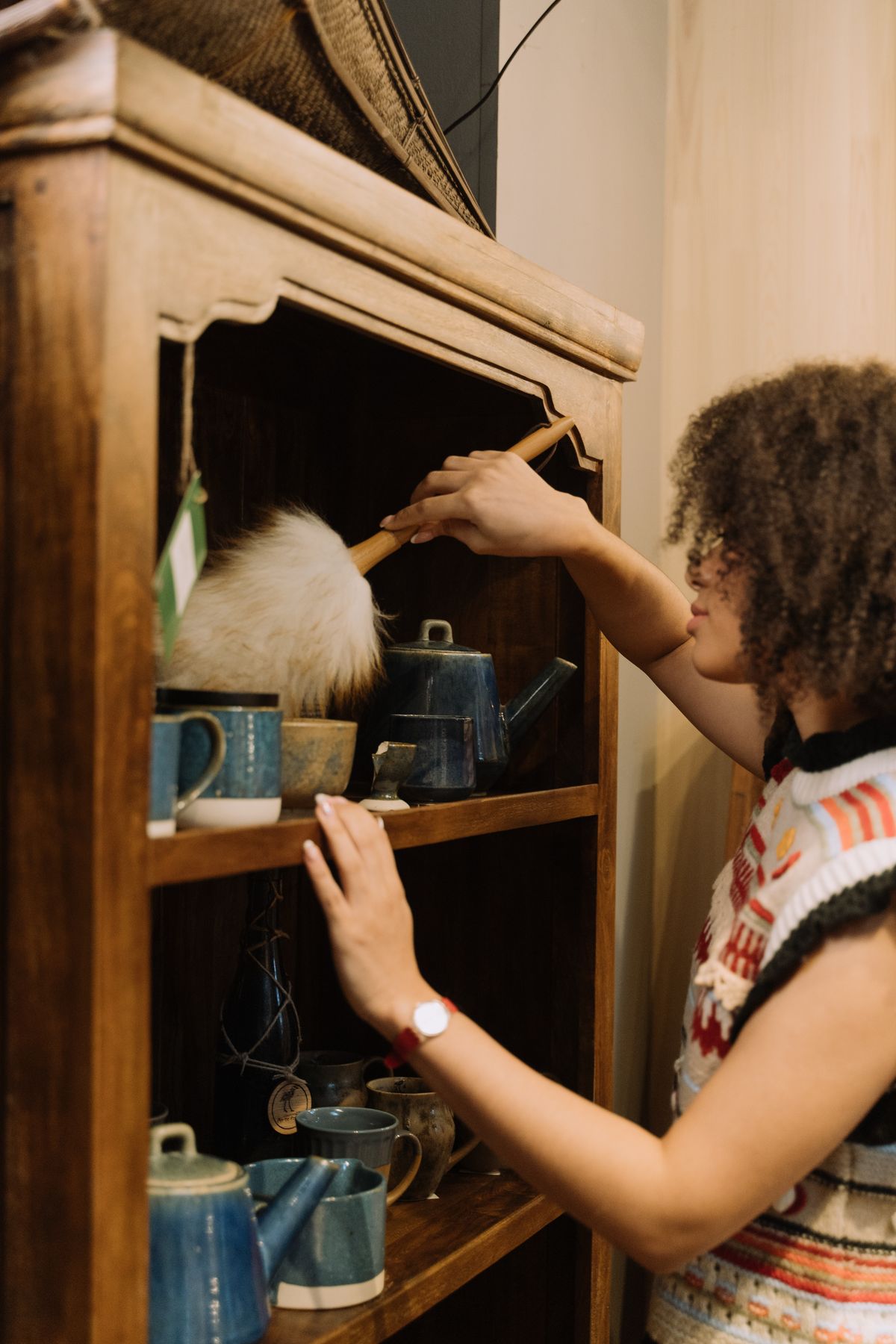
Deal with accessible higher surfaces first, then shelves and furniture, leaving the floor until last. Use an appropriate reaching tool instead of standing on an unstable chair. Do not shake a dusty cloth inside the room. Folding it gives you clean faces to use as you progress. On a shelf, clean each object and its position before returning it. Moving everything to one end and pushing dirt towards the other often leaves some of the job undone and can trap grit beneath delicate bases.
Moisture depends on the finish
A lightly damp cloth can help on surfaces that allow it, but it is not a rule for books, screens, unprotected timber or appliances. Check delicate items' instructions and avoid spraying directly towards connections. A carved frame may suit a dedicated soft brush while a smooth tabletop needs a different tool. Inspect cloths for grit. When moving from a greasy area to a polished surface, change the cloth or its working face rather than transferring residue. The tool's condition matters as much as the intended cleaning method.
Include the less visible spots
Door edges, lamp bases and skirting collect dust despite rarely appearing in the centre of a room photograph. Include them in rotation as needed, without dismantling electrical parts or inserting tools into openings. Switch lamps off and let them cool before following their care instructions. With books, avoid wetting pages or blowing dirt into the spine. Careful surface cleaning is preferable to an intensive intervention that distorts paper or loosens a fragile finish. Not every intricate object needs to be handled on every cleaning day.
Finish the floor and the tools
Vacuum or sweep using the method appropriate to the flooring, checking around furniture you moved. Return objects once their supporting surfaces are dry. Wash cloths as instructed and store them dry; dirty equipment makes the next session less effective. Notice where dust returns most quickly when choosing a schedule. A busy entrance and a sheltered high shelf do not necessarily need equal attention. Keeping some surfaces clear reduces handling time without requiring you to remove every decorative object you enjoy having around.