Read the oven instructions first
Check the model manual before starting. An oven can combine enamel, catalytic panels, seals and accessories that need different care, and it may include a dedicated cleaning cycle. Do not spread a chemical cleaner over every part merely because its bottle says oven cleaner. Special panels or coatings may require another method. Switch the appliance off, allow it to cool and follow its isolation or preparation instructions before working. A dark display alone is not a complete cleaning procedure or permission to dismantle internal parts.
Remove accessories and work in sections
Take out trays and shelves where the manual permits and prepare somewhere to support them without scratching a worktop or sink. Collect loose debris inside with a non-abrasive implement. Do not dismantle elements, fans or panels to reach a splash. Keep cleaning liquid out of openings and electrical components. If a spill has travelled behind an inaccessible part, ask for instructions instead of pushing wire into the gap or soaking the area in the hope of washing it back out.
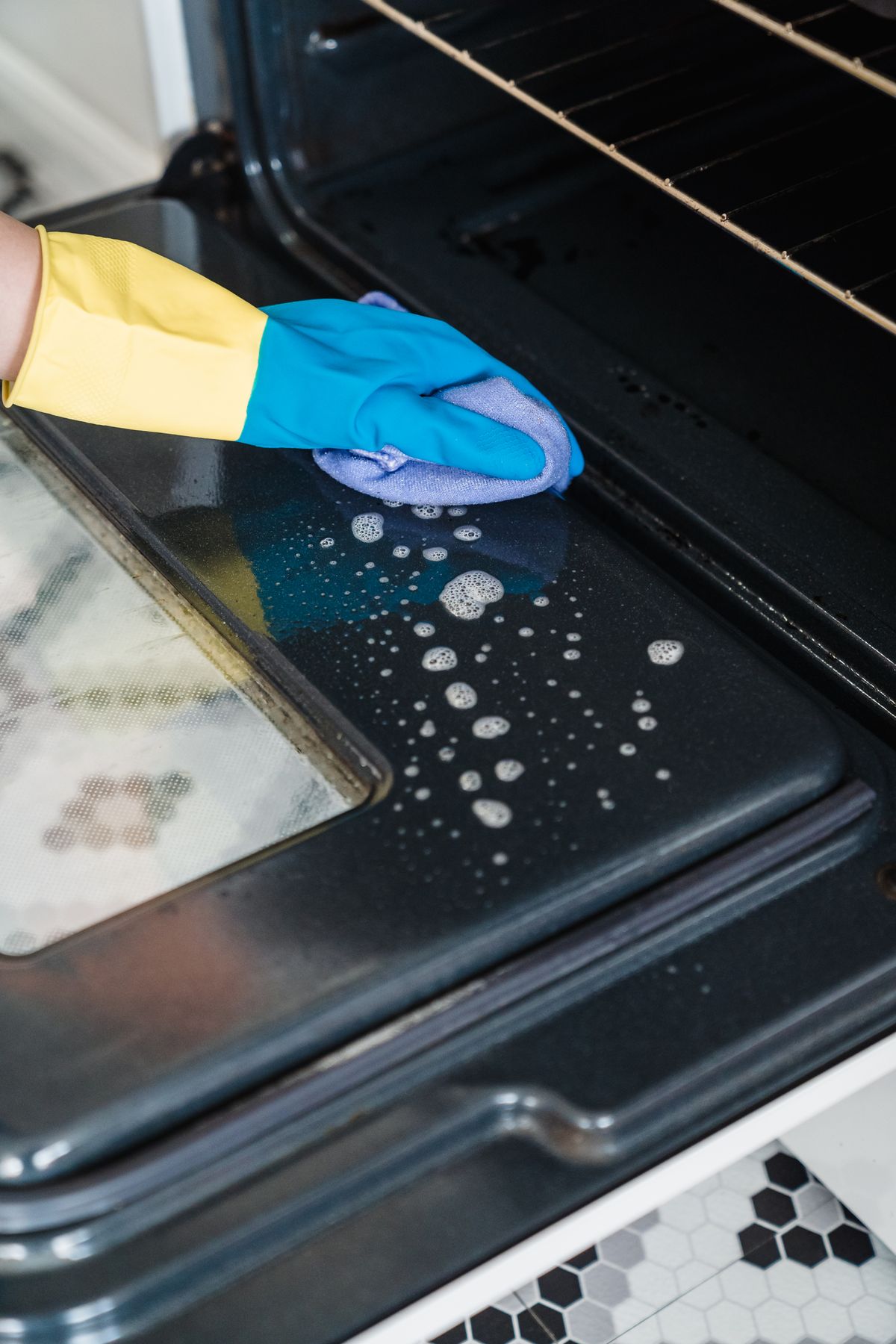
Use the product and procedure compatible with the lining, observing protection, ventilation and contact-time instructions. Do not mix formulas or add bleach. Make sure you can see what you are doing and avoid putting your body weight on the open door. Remove the cleaner as directed afterwards. An apparently clean surface can retain product in a corner; examining accessible edges and joins is more useful than repeatedly treating the central area that is already clean. Keep the cleaning cloth away from delicate seals.
Automatic cleaning has conditions
For pyrolytic or another integrated programme, follow the manufacturer's exact preparation. Some accessories must come out while others may remain; their metallic appearance does not decide the answer. Remove excessive debris where instructed and provide the ventilation specified in the manual. Do not combine a high-temperature cycle with a cleaner that is not authorised for it. Wait for completion and cooling before removing residue. Never force a locked door. A cleaning function is part of a particular appliance, not a method to copy between different ovens.
Make the next spill smaller
Use cooking dishes with sufficient headroom and place a catching tray only where permitted, without obstructing airflow. Do not routinely line the oven floor with foil; it can interfere with operation. When cleaning the door, protect the seal and avoid abrasive treatment of the glass. Unusual smoke, damaged enamel or a loose seal needs attention before further cooking. Cleaning cannot replace a necessary repair. Keep the manual accessible so that the next decision takes less time than searching for another general household trick.
Further reading: