Identify the wall paint
Look for a saved tin, invoice or the decorator's product reference. Matt, satin and washable finishes do not necessarily tolerate the same treatment. Fresh paint may also need a curing period before cleaning that differs from being dry to the touch. Check its technical guidance. With an unknown finish, do not start with strong degreaser or an abrasive sponge. A small discreet mark is preferable to a large area where the paint layer has been removed or polished during an attempt to make it spotless.
Remove loose dust first
Lift surface dust gently with an appropriate tool, without dragging gritty particles. Applying moisture directly to a dusty wall can create a larger dirty patch. Move pictures and furniture only where safe, protecting the floor from possible drips. Around sockets and switches, do not spray or allow liquid into openings. Dirt on a switch plate may require different care from the surrounding paint; dismantling electrical components is not part of this household cleaning method. Keep the treatment controlled and away from those openings.
Try an inconspicuous area
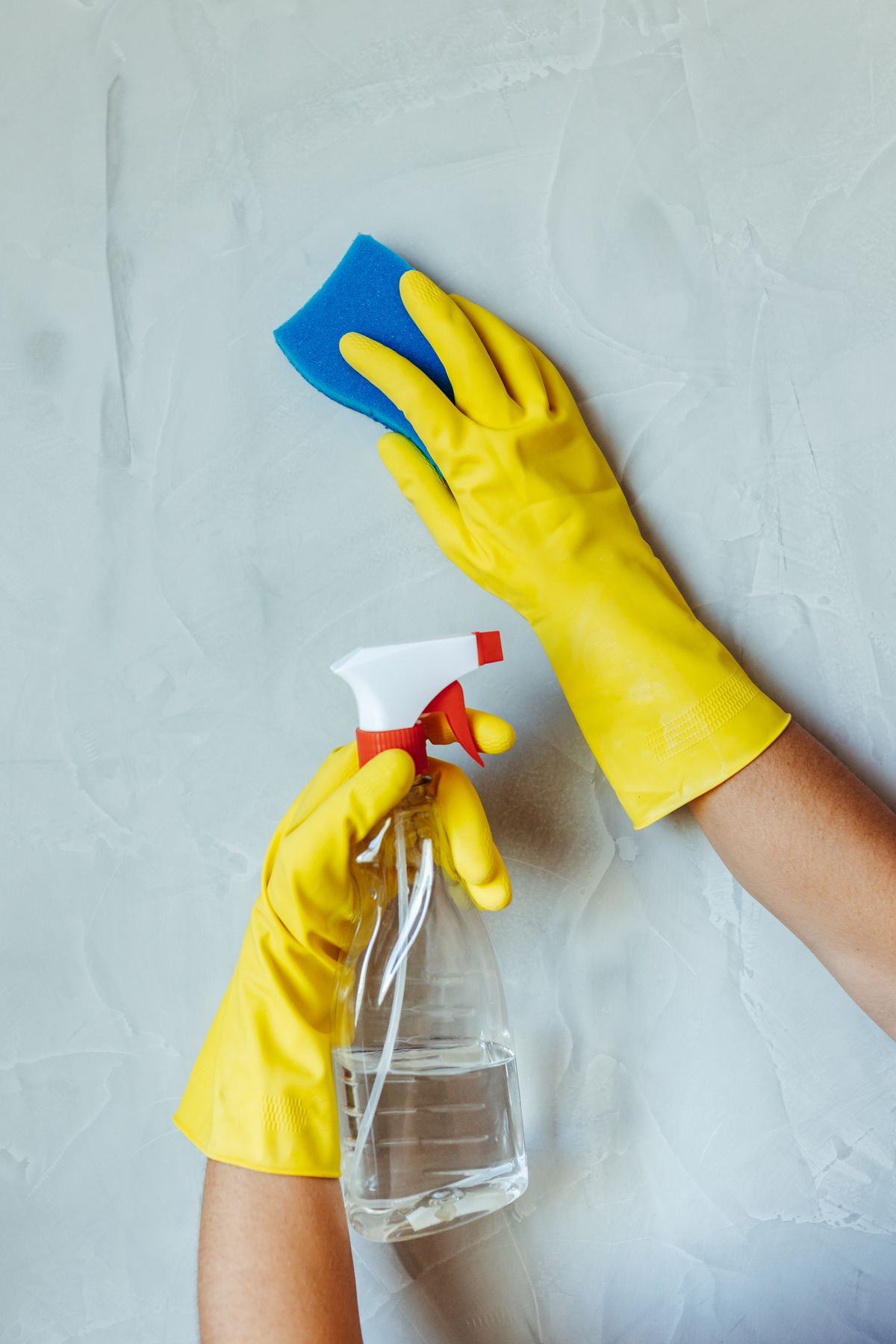
Behind a piece of furniture, use the method permitted by the paint with a soft, well-wrung cloth. Avoid excessive pressure and allow the test to dry completely. Look from several angles to compare colour and sheen. Stop if paint transfers to the cloth or the finish changes. The absence of flaking does not establish that the method is harmless: a matt surface can become polished and look different when daylight strikes it from the side. Waiting before extending the treatment protects the visible wall.
Match the response to the mark
A recent fingerprint, rubber scuff and greasy splash do not behave identically. Do not cycle through products hoping that one will work. Where the manufacturer provides instructions for that mark, follow its contact time and rinsing method. Avoid soaking the wall or treating wallpaper as though it were plain painted plaster. Abrasive cleaners can remove part of the finish. If the mark remains after an authorised method, consider a planned touch-up instead of enlarging the damaged area through further friction and repeated wetting.
Decide between touch-up and investigation
A touch-up depends on colour, sheen and the wall's ageing; even the original tin may leave a visible difference. Test before covering a substantial area and ask whether painting to a natural boundary would be more consistent. If moisture caused the mark, identify and resolve its source before repainting. Do not hide a recurring leak simply to improve the room's appearance. Keep the paint reference and date of work, which will help with the next cleaning decision as well as any later repair or redecoration.