Look at the construction too
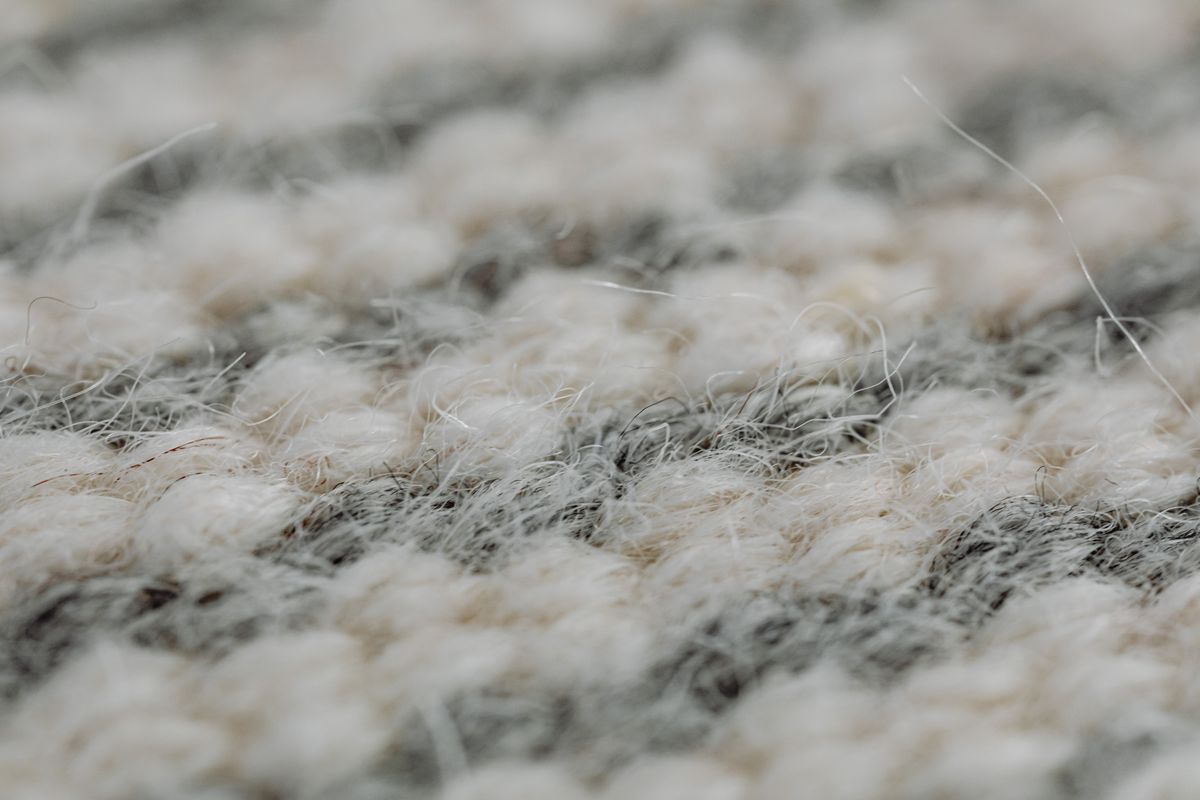
Read the label and establish whether the rug is knotted, woven or made with a pile attached to a backing. Fringes, joins and backing are part of the object even when its description mentions only wool. Do not run a rotating brush across loose areas to see whether they improve. A delicate or valuable rug deserves specific care advice. Photograph its label before positioning it beneath furniture, where checking it later will be less convenient. Fibre content alone cannot describe the whole construction.
Vacuum without pulling threads
Choose the recommended attachment and suction setting. A motorised brush can catch loops or fringes, so do not assume that it is suitable. Make controlled passes and avoid repeatedly running over a projecting yarn. Do not pull the yarn out. Inspect the head for tangled hair and hard particles before starting. When practical, carefully lift an edge to clean underneath: grit trapped between the rug and floor matters too, especially near a doorway or a frequently used route through the room.
Treat a spill in stages
First lift solids without pressing them into the pile and blot liquid with a dry white cloth. Work from the affected area's edge towards its centre to avoid enlarging it. Then establish whether the label permits local treatment. Choose a cleaner compatible with wool and with the particular rug, following its directions. Test colour stability discreetly and allow the test to dry. A household mixture that worked on synthetic carpet is not reliable evidence for a dyed wool piece with a different backing.
Drying, wear and storage
Avoid soaking the rug or replacing a chair over a damp area. Its underside and the floor can take longer to dry than the visible pile. If the mark requires extraction or whole-rug cleaning, consult a service familiar with the material and explain its construction. Do not put it in a washing machine merely because it fits when folded. Fragrance will not solve an odour that returns; investigate retained moisture or residue instead of repeatedly covering up the symptom.
If the room arrangement allows, occasionally change the rug's orientation so that traffic does not always cross the same strip. Lift furniture with assistance rather than dragging it across the textile. Check that the underlay remains flat and is compatible with the floor. Before storing the rug, make sure it is clean and completely dry. Ask how its construction should be rolled and protected rather than folding it sharply to fit a smaller cupboard. Storage should preserve the shape, not merely save space.
Further reading: