Measure the area to be covered
Take the usable width of the proposed pole or track, not only the glass. Decide how far coverage extends on each side and where fabric will gather when open. Include handles, corners, furniture and window movement. If the system is not installed, draw its position before ordering curtains. Do not extend a pole without checking supports and fixings. A longer track may improve stacking space, but still needs actual room and an installation appropriate to the wall or ceiling supporting the completed curtains.
Understand the advertised width
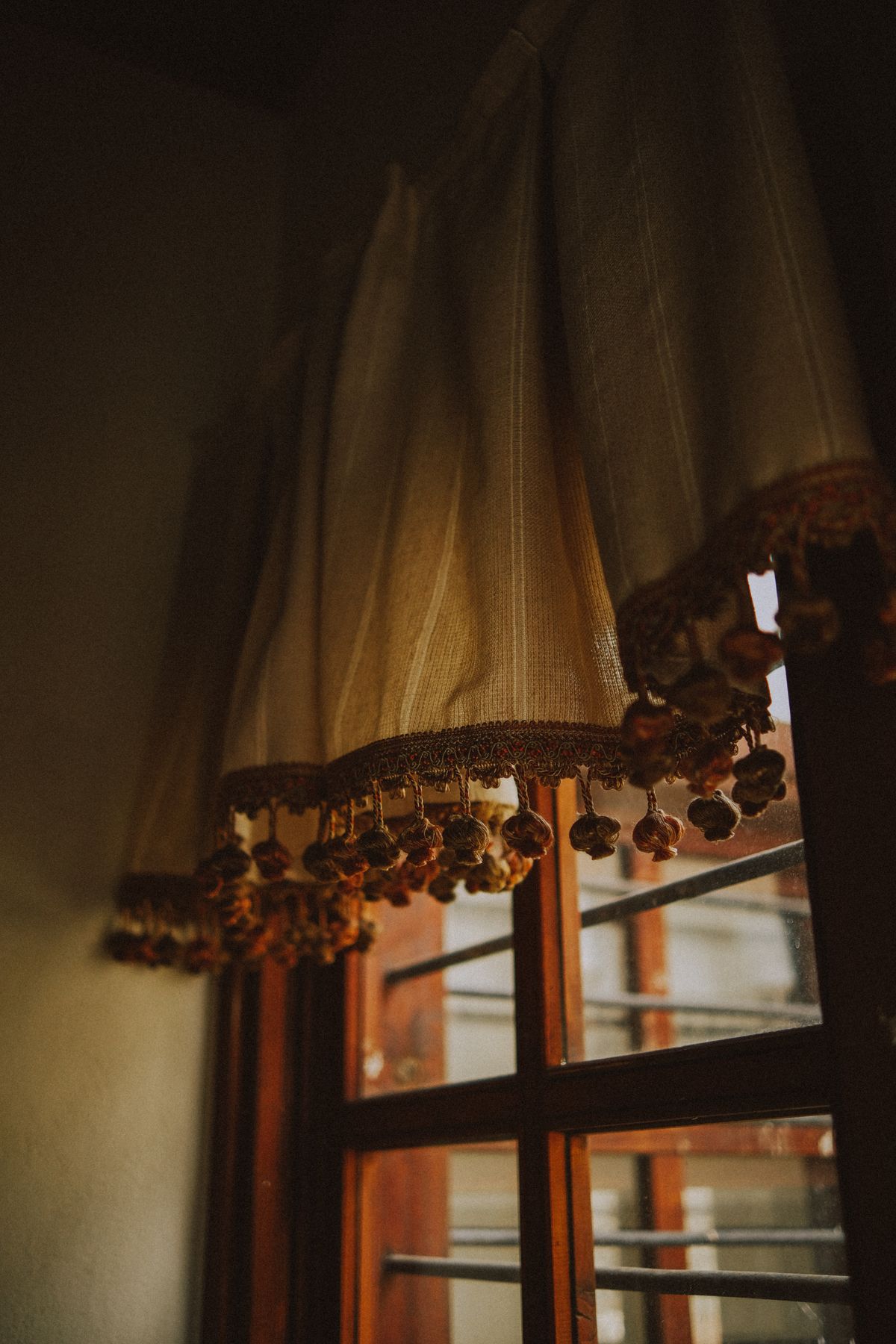
A listing may state each panel's flat width or its coverage after gathering. Check whether the package contains one panel or a pair. Two curtains with equal flat widths may cover different areas because of heading style and intended fullness. Follow the recommended ratio for that system rather than applying one universal multiplier. With made-to-measure work, confirm in writing which measurement you should supply and what the maker's calculation includes, avoiding adding the gathering allowance twice and receiving much more fabric than intended.
Allow for meeting and stacking
For two panels, examine how they meet centrally and whether the system requires overlap or side returns. For darkening, fabric and edge gaps need consideration together. Check the stacked volume when open as well; it may cover part of a narrow window. Heavy fabric requires a different arrangement from a light sheer. With two layers, review the double track and spacing between them, plus the total fabric that needs to move freely without snagging. A calculation that closes well should also work when the curtains are open.
Check the order on paper
Write down track width, panel count, heading type and advertised measurement per unit. Add length and final position so that solving width does not leave other dimensions forgotten. Review care and any planned alteration. If the calculation remains ambiguous, send the seller the sketch instead of rounding by eye, and retain the response. Buying extra fabric as insurance can create awkward stacking, while buying only the glass width may produce flat panels that do not cover as expected. Clear definitions are more useful than generous guessing.
Further reading: