Observe the hours that matter
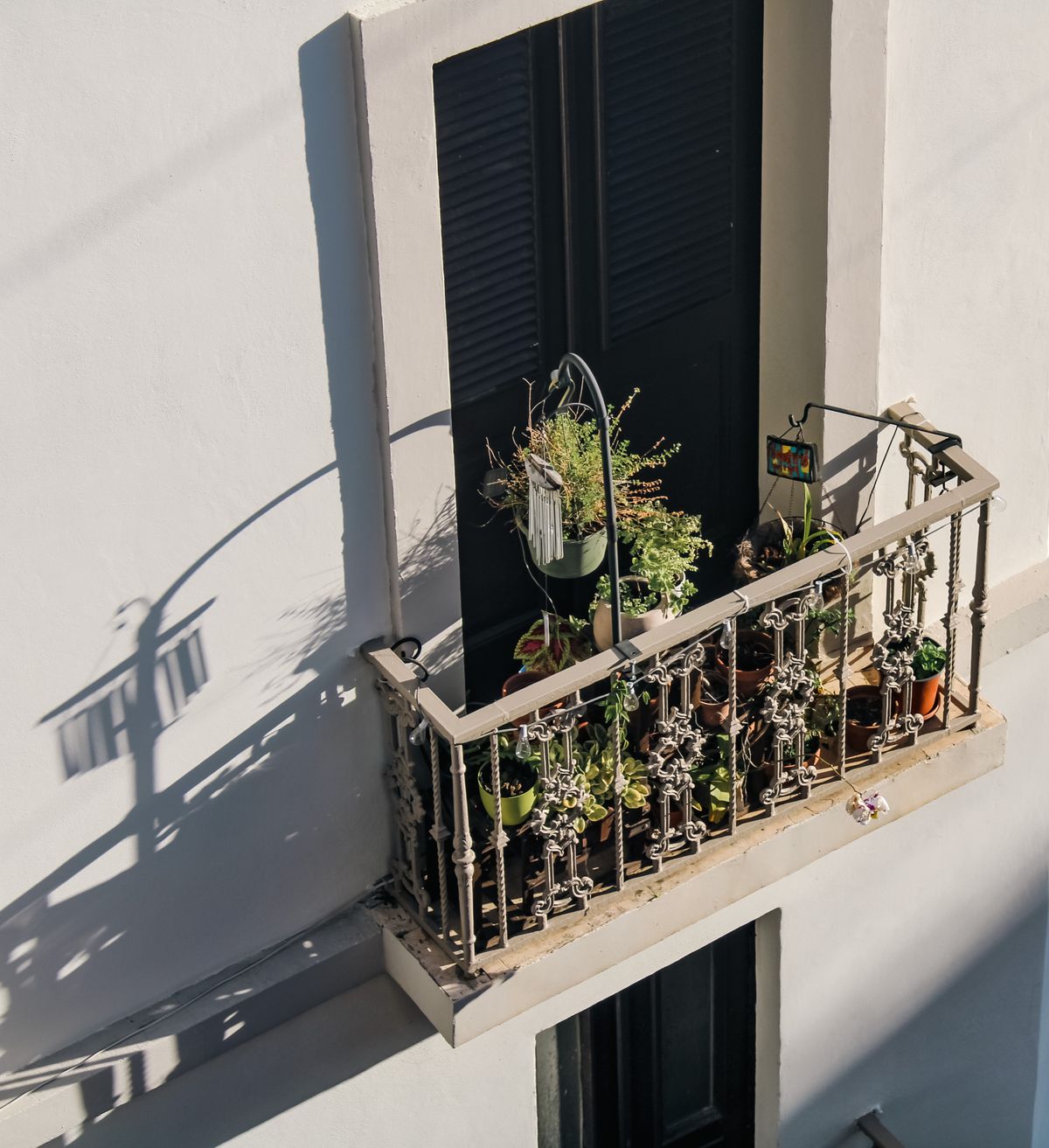
Note when direct sunshine arrives and when it leaves. An approximate compass direction is useful, but the opposite building, a tree and the balcony above can substantially alter the real exposure. Gentle early sunshine also feels different from strong light on a hot afternoon.
Make these observations on days when you would normally sit outside. One photograph taken at noon is not enough to choose a solution. Recheck as the season changes: something pleasant in spring may admit lower sunshine later in the year or make the room behind the balcony unnecessarily dark.
Decide what needs shade
You may only want to shade a chair while reading. Moving that chair could solve part of the problem before you add any structure. If the intention is also to shelter a glazed door, consider the larger area involved and how the opening needs to operate.
Assess plants separately. Their tolerance of direct sun differs, and a screen that makes the seat more comfortable may remove too much light from a pot. Avoid turning a brief need for afternoon shade into a permanent enclosure that changes every part of the balcony.
Take wind and installation seriously
Wind places forces on awnings, parasols and panels. Read the manufacturer's operating conditions and limits, together with the building or residents' association rules. Do not improvise ties to a railing or drill waterproofing to secure what seems like a temporary arrangement.
A heavy base does not by itself prove a parasol is suitable. The base must match the model, and its weight must be appropriate for the structure supporting it. Where a solution needs structural fixings, obtain professional advice rather than copying an attachment seen in a photograph.
Make closing it straightforward
Check that you can retract or remove the shade without shifting every piece of furniture. Store detachable parts where they will not obstruct the exit, and follow the instructions for windy conditions or an extended absence. Inspect fabric, connections and moving parts periodically, especially after a season in storage.
Further reading: