Map the journeys you already make
A small living room does not necessarily contain too much furniture. Sometimes the coffee table sends you around the sofa to reach a window, or an armchair occupies the space needed to open a door. During an ordinary day, notice how you enter, where you put down what you are carrying and how you reach the balcony or dining area.
Transfer those observations to a rough sketch. Include doors, radiators, sockets and the direction each door opens. Draw furniture at its actual size, allowing for arms and projecting handles. The sketch does not need to look polished. Its job is to reveal where two activities are competing for the same patch of floor.
Position the piece that sets the room
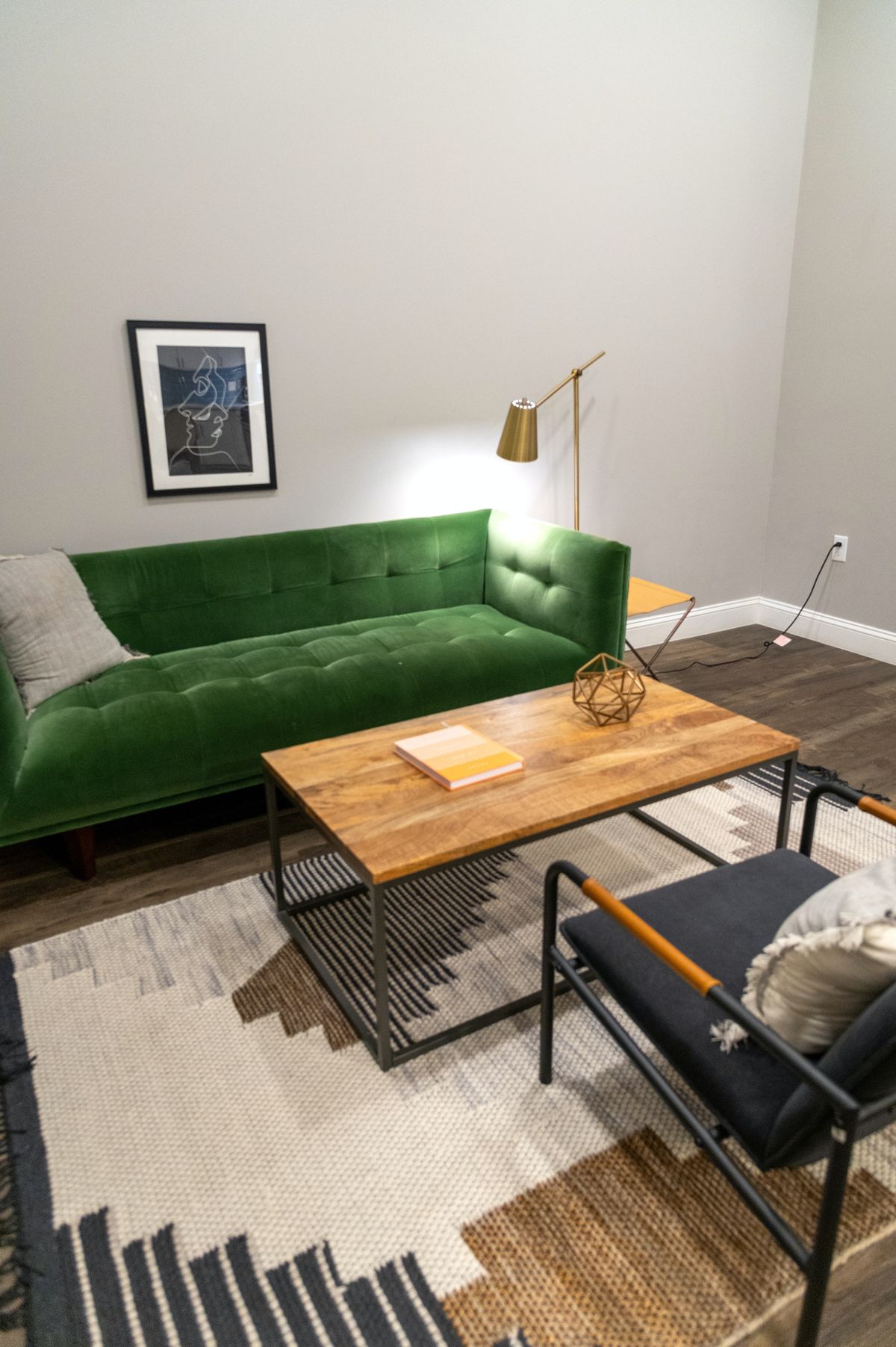
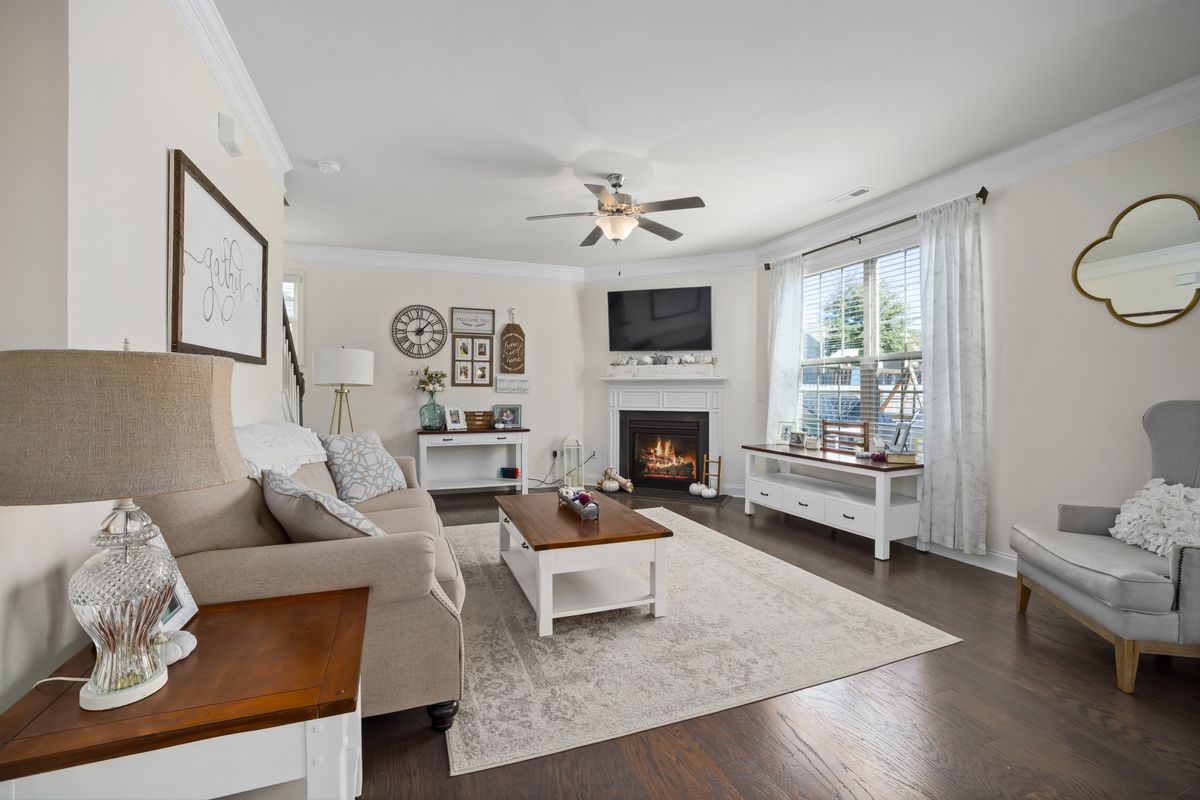
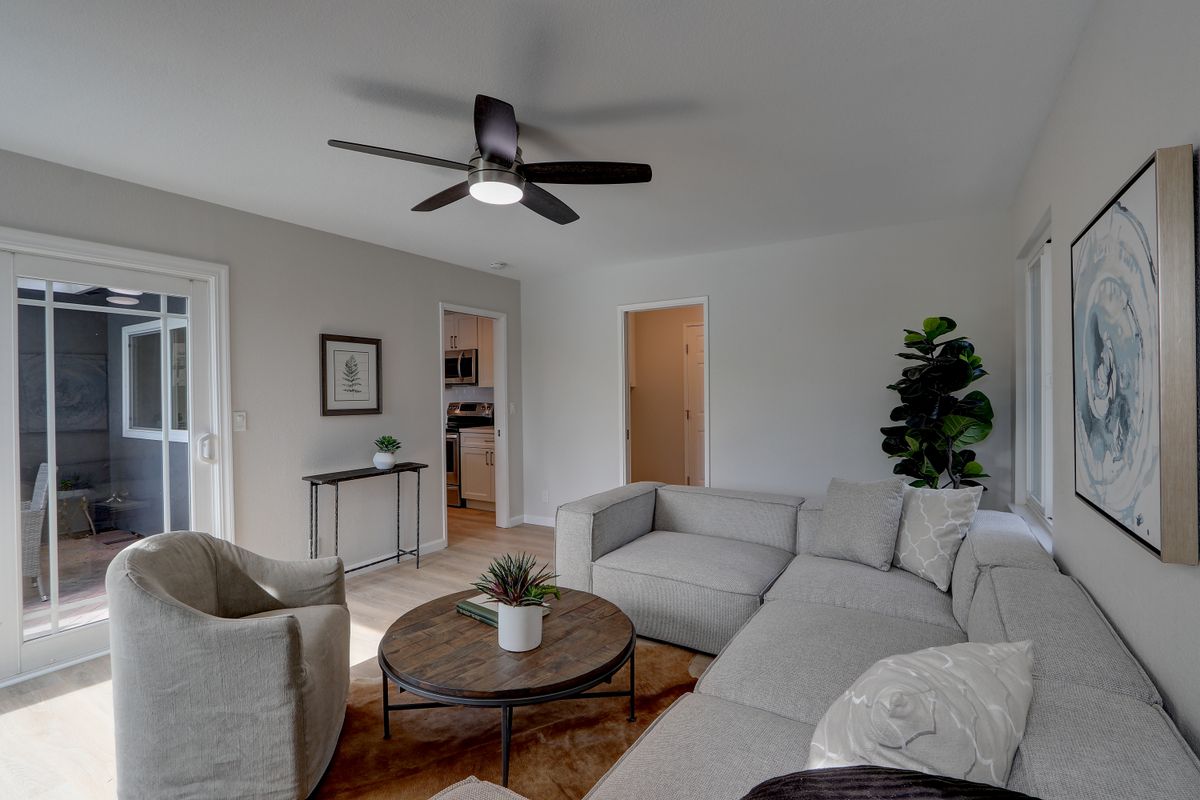
This will often be the sofa, although a dining table may take priority in a shared room. Try its position before arranging smaller pieces. Facing the television makes sense when watching it is the main activity. For conversation, seats should face one another without making people twist around throughout a visit.
Furniture does not automatically belong against a wall. Moving a sofa forward can define a seating area, but only if the space behind it has a purpose. A strip that is too narrow to walk through and awkward to clean is not useful circulation space. Check that this move improves everyday use rather than only the view from the doorway.
Test the room with things in use
Mark a proposed table's footprint with paper or tape suitable for your floor. Sit down, stand up and walk through carrying an empty tray. Pull dining chairs out as though someone were sitting in them. Open cabinet doors and drawers, and extend any reclining seats. Furniture needs working space beyond its closed dimensions.
Include the people who actually use the room in this rehearsal. A gap that looks generous in a photograph may be awkward with a walking aid, a pushchair or someone helping another person stand. Keep exits clear and adapt the routes to these needs rather than treating a photographed layout as a universal measurement guide.
Look closely at the smaller obstacles
If a route almost works, reconsider a side table before replacing the sofa. A surface beside the sofa arm may do the job of a bulky central table. Nesting tables offer flexibility, but they still need a sensible position when pulled apart. Think about where a drink can be set down without blocking a knee or doorway.
Do not solve the shortage of surfaces by running lamp cables across a walkway. Place lighting near a usable socket and manage excess cable without hiding it under a rug. Check that rug corners lie flat and that any backing is suitable for your floor finish. These details affect how easy the arrangement feels.
Live with the arrangement before buying
Try the layout with furniture you already own for a few days. Notice what you move every evening and where belongings pile up. A tall bookcase may supply missing storage, but install its required anti-tip restraint with fixings appropriate to the wall. A successful room lets you use it without repeatedly rearranging it.
Further reading: