Measure from the real hanging point
The useful measurement starts where the fabric is suspended, which is not always the top of the pole. Rings, hooks and eyelets position the heading differently. When buying ready-made curtains, check how the manufacturer defines the stated length and sketch that measurement beside your window.
Measure to the floor at both ends and in the middle. A slightly uneven floor can leave one edge dragging while the other looks short. Note skirting boards, sockets and nearby furniture as well. These details help you decide whether to adjust each hem individually or leave a small clearance above the highest point.
Choose a finish you can live with
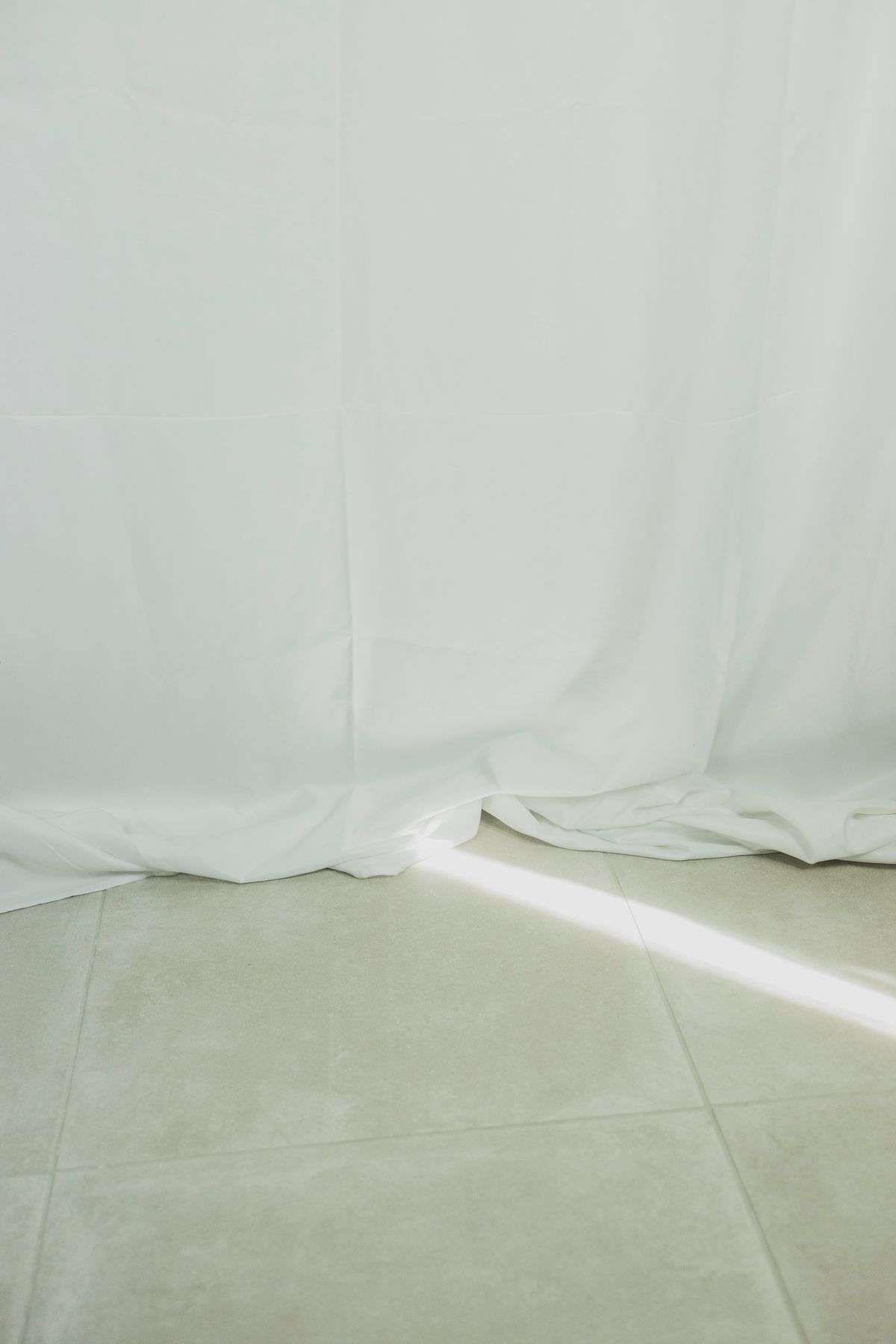
Curtains that finish near the floor often give a room a continuous line. Keeping the hem slightly clear makes vacuuming easier and prevents the edge collecting as much dirt. There is no universal gap: mock up the length with a securely supported sheet and look from the doorway and your usual seat.
Fabric pooling on the floor creates a more theatrical effect, but it needs rearranging after movement and takes up space. It can become awkward beside a balcony door or a busy walking route. If you use that exit every day, favour an edge you do not have to push aside with your foot.
Look beneath the window
In a kitchen, above a desk or beside a closely fitted cabinet, a shorter curtain may be the sensible option. Check that it cannot touch water, food, hot appliances or moving window fittings. An inward-opening window needs enough room to swing without catching the fabric.
Do not cover radiators, vents or heating equipment without checking their clearance requirements. A suitable blind may leave the area below the window free, although its mechanism and cord safety also need consideration. You do not need to solve every window in the house in exactly the same way.
Before cutting a hem
Read the care instructions and check whether the manufacturer recommends washing or conditioning the fabric before adjusting its length. Shrinkage varies; adding a guessed allowance does not replace this information. Hang the panels and let them settle as directed before marking a permanent alteration.
Keep a photograph of your measurement and note the ring or hook type. Changing the suspension system later will also change the apparent length. A successful hem depends on the whole arrangement rather than the single number printed on the packaging. If someone else is making the alteration, give them that full measurement context, including which edge should remain clear of the floor.