Decide what the shelf must do
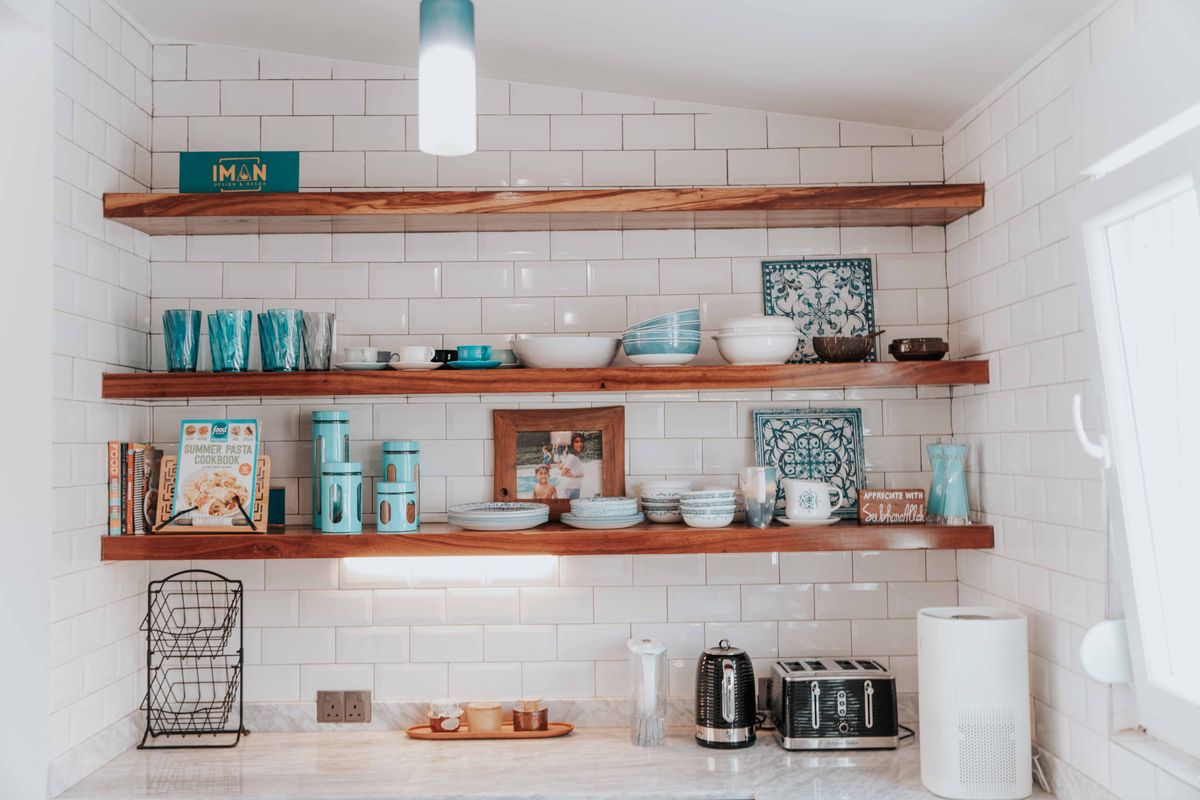
Separate frequently used things from objects you simply want to display. Everyday plates need different access from delicate decorative pottery. Put heavy items at manageable heights and respect the shelving system’s load and fixing requirements.
Do not fill the highest space first for visual effect. Consider how you will reach each object and avoid making an unstable chair your regular access equipment. If retrieving something involves too much manoeuvring, it may not belong on an everyday shelf.
Group things for a reason
A group of books, another of bowls and a box of small accessories can read more clearly than scattered individual objects. The box helps when it contains one activity, rather than everything you cannot place elsewhere. Keep its contents visible or labelled so you can remember what is inside.
Alternate occupied areas with empty space. You do not need a precise ratio or a different composition on every shelf. Look from the room’s usual viewpoint and remove a piece if the eye has nowhere to rest. The aim is a shelf that remains understandable rather than a display requiring constant adjustment.
Make room for actual use
A very tall stack of plates can be awkward and risky to lift. Divide the contents into loads you can handle safely. If a picture leans behind other objects, check that it remains stable when the front items are removed and provide whatever fixing it needs.
In kitchens or beside open windows, dust and grease change the maintenance burden. Keep rarely used pieces behind doors and frequently handled items outside where the setting allows. A photograph of clear shelves does not show the cleaning involved.
Review after a week
Notice what returns to its place and what lands on the table instead. The issue may be height, a difficult box lid or an arrangement packed too tightly. Adjust that specific problem before buying more containers.