Count the actual absence
Work from the last time you can inspect the plants to the moment you will be able to check them again. Include travelling days and a possible late return. Compare that period with each pot's usual behaviour under current conditions, rather than its drying pattern in a different season.
A cool week is not equivalent to several very hot days. Review the forecast and notice how quickly the growing medium is drying before you leave. A small plant beside a sunny window and a large specimen in a cool corner may need different arrangements.
Avoid dramatic last-minute changes
Do not flood every pot to make it last. Check moisture, water the plants that need it and allow excess to drain as usual. Leaving water in an ordinary outer container does not turn the arrangement into a designed self-watering system.
A modest move to a suitable position somewhat sheltered from heat may help in some circumstances, but do not shut plants in a dark room. Preserve conditions compatible with each species and avoid removing their access to useful light throughout your absence.
Test equipment while you are home
Wicks, reservoirs and other devices depend on the growing medium, container and setup. Trial them at home for a period comparable to the trip. Check whether they deliver too much or too little, and look for leaks onto furniture or flooring.
Do not introduce a complicated system as you close the front door. For a small collection, asking someone to make a specific check may be more dependable. Leave a short note with the pot's name or photograph, what to inspect and what to do if it remains damp, instead of prescribing an identical quantity for everything.
Make help straightforward
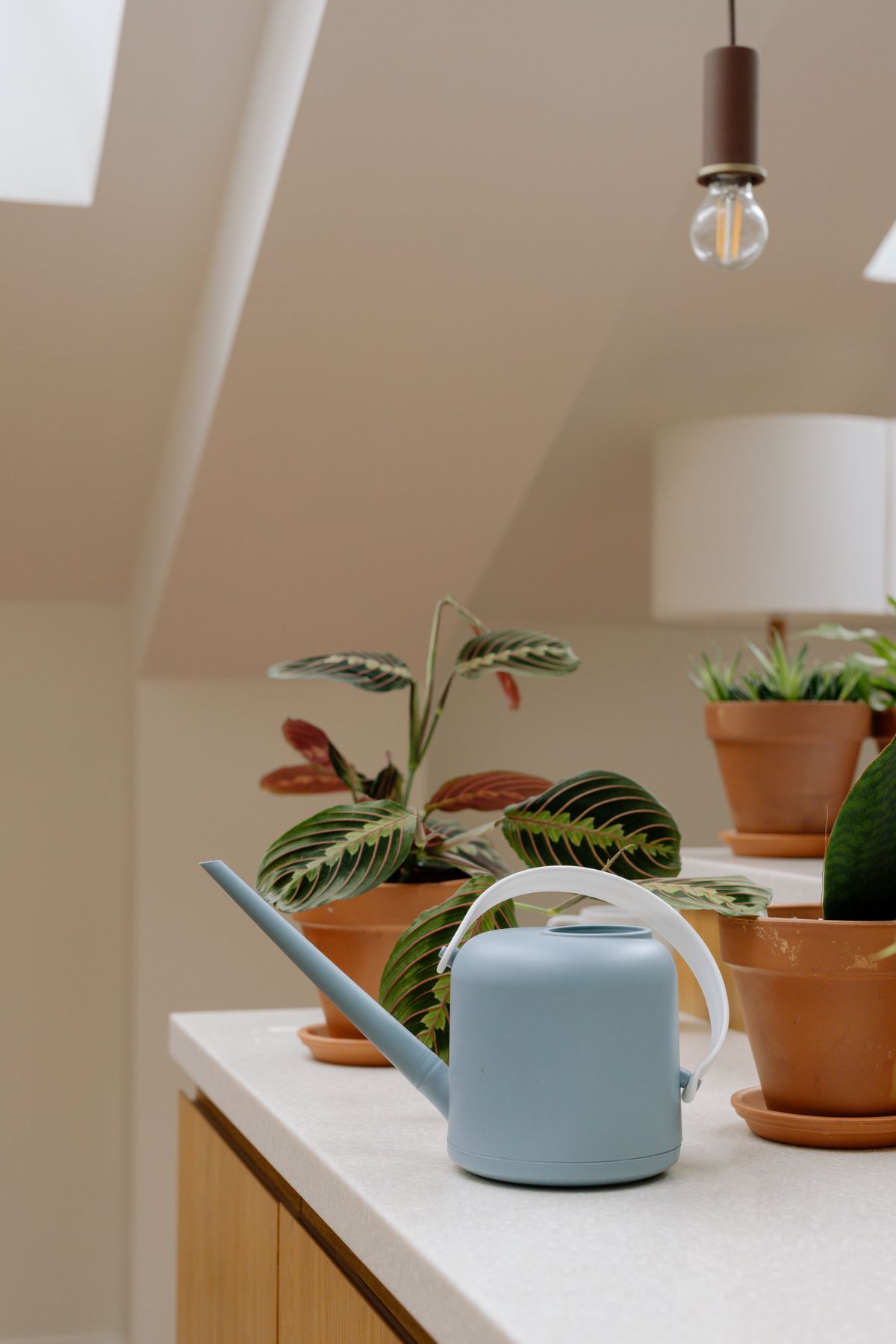
Group only plants that can share conditions, provide a manageable watering can and clear access. Explain how to remove excess water and how to contact you if something looks different. Avoid asking for repotting or treatments during your absence unless there is an already identified need.
Further reading: