Keep a name you can verify
Ask for the scientific name as well as the common one. Popular names can refer to different plants, and two similar-looking specimens do not necessarily have the same toxicity. Consult a veterinary database or specialist source using the exact plant identity and the relevant animal species.
The ASPCA database allows plant searches and distinguishes information for dogs, cats and horses. Do not assume a conclusion for one applies to every animal. If identification remains uncertain, postpone the purchase or seek help confirming what the plant actually is.
Non-toxic does not mean edible
A plant being listed as non-toxic does not mean a pet should be encouraged to chew it. Plant material can still cause digestive upset, and a pot also contains growing medium, fertilisers or other materials. Review products you use and store them beyond reach in accordance with their labels.
Think about your pet's behaviour too. A cat that jumps onto shelves and a young animal that chews objects need different arrangements. Putting a plant higher up may not prevent access, especially when nearby furniture provides a series of convenient steps.
Create realistic separation
Where there is a risk, keep the plant in a genuinely inaccessible area instead of relying on telling the animal off afterwards. Avoid unstable pots that could fall during a jump and stands that tip when brushed. Trailing stems can attract more attention than a compact plant.
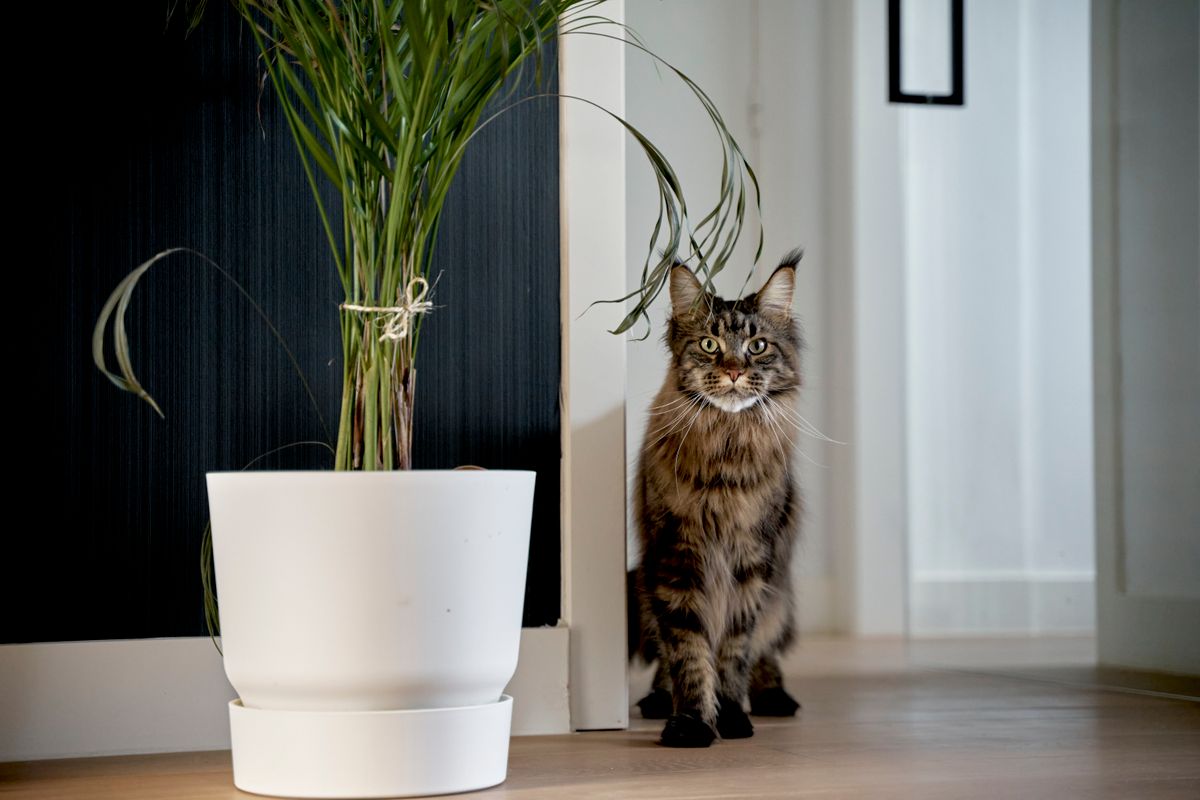
Consider cut flowers and gifts entering the home as well as the pots already there. Keep labels or identifying photographs so they can be checked. Do not infer safety from a decorative photograph showing an animal beside a plant, including an image accompanying a home guide.
Prepare useful information
If you suspect your pet has swallowed a problematic plant, contact a veterinarian rather than waiting to diagnose symptoms yourself. Have the name, a photograph and an estimate of the time and possible amount available. Do not induce vomiting or make home remedies unless instructed by a veterinary professional.
Further reading: